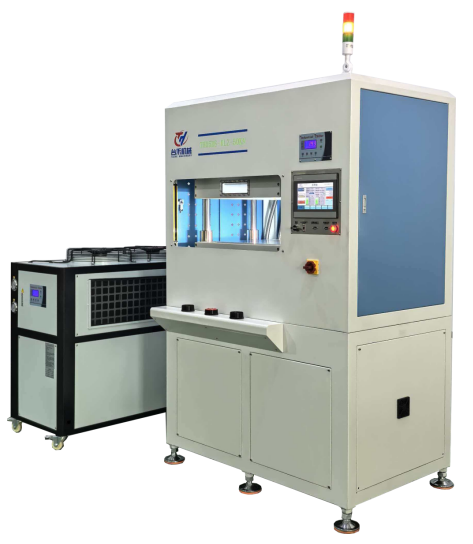

In the industrial sector, hardfacing welding machines play a crucial role in extending the life of metal components exposed to extreme wear, corrosion, and impact. Industries such as mining, construction, and manufacturing rely heavily on these machines to maintain the performance and durability of equipment. When it comes to selecting the right hardfacing welding machine, three primary technologies dominate the market: MIG (Metal Inert Gas), TIG (Tungsten Inert Gas), and Submerged Arc Welding (SAW). Understanding the differences, advantages, and limitations of each technology is essential for making an informed investment.
What is Hardfacing Welding?
Hardfacing is the process of applying a wear-resistant layer of metal to the surface of a component. This layer is typically made from alloys that provide exceptional hardness, toughness, or corrosion resistance. The primary purpose of hardfacing is to protect components such as excavator buckets, bulldozer blades, pump impellers, and industrial rollers from premature wear and tear.
Industrial hardfacing welding machines facilitate this process by precisely depositing the alloyed metal onto the surface of the base material, forming a durable protective coating. While multiple welding methods exist, MIG, TIG, and Submerged Arc Welding are the most widely used in industrial applications. Each method offers unique characteristics, and choosing the right one depends on factors like material type, layer thickness, productivity requirements, and cost.

MIG Hardfacing Welding Machines
MIG welding, also known as Gas Metal Arc Welding (GMAW), uses a consumable wire electrode that melts continuously to create the weld. An inert shielding gas, usually argon or a mix of argon and CO2, protects the weld pool from atmospheric contamination.
Advantages of MIG Hardfacing Machines
-
High Deposition Rates: MIG welding allows for continuous feeding of the wire, resulting in faster material deposition compared to TIG. This makes it ideal for large components and high-volume production.
-
Ease of Automation: MIG welding can be easily automated using robotic arms or semi-automatic setups, improving consistency and reducing labor costs.
-
Versatility: MIG machines can handle a wide variety of hardfacing alloys, including nickel-based, cobalt-based, and iron-based fillers, allowing customization for specific wear resistance requirements.
-
Ease of Learning: Operators can achieve high-quality welds relatively quickly with MIG, making it suitable for industrial environments where skilled labor may be limited.
Limitations of MIG Hardfacing Machines
-
Less Precision: MIG welding is less precise than TIG, making it less suitable for intricate or small-scale hardfacing applications.
-
Potential Porosity: Without proper shielding gas coverage, MIG welds may suffer from porosity, which can reduce the durability of the hardfaced layer.
-
Equipment Costs: Although affordable for large-scale operations, MIG machines and wire consumables can be more expensive than some manual hardfacing methods.
TIG Hardfacing Welding Machines
TIG welding, or Gas Tungsten Arc Welding (GTAW), uses a non-consumable tungsten electrode to produce the weld. The filler metal is added separately, and an inert gas, usually argon, shields the weld area from oxidation.
Advantages of TIG Hardfacing Machines
-
High Precision: TIG welding offers precise control over the heat input and weld pool, making it ideal for thin materials or components requiring intricate hardfacing patterns.
-
Superior Weld Quality: TIG welds exhibit minimal spatter, porosity, and defects, producing a smoother and more aesthetically pleasing surface.
-
Versatility in Alloys: TIG allows for precise deposition of specialized alloys, such as chromium, tungsten carbide, or cobalt-based metals, optimizing wear and corrosion resistance.
-
Better Heat Control: The process generates less heat input than MIG or SAW, reducing the risk of distortion in sensitive components.
Limitations of TIG Hardfacing Machines
-
Lower Deposition Rates: TIG welding is slower than MIG or SAW, making it less suitable for large-scale industrial applications where productivity is critical.
-
Higher Skill Requirement: TIG welding requires experienced operators to maintain consistent weld quality, increasing training costs.
-
Equipment Sensitivity: TIG machines are more sensitive to contamination and require well-maintained equipment and consumables.
Submerged Arc Welding (SAW) Hardfacing Machines
Submerged Arc Welding (SAW) is a highly efficient process where the arc is submerged beneath a layer of granular flux. This flux protects the weld pool, stabilizes the arc, and minimizes spatter. SAW machines typically use a continuous wire electrode, similar to MIG.
Advantages of Submerged Arc Hardfacing Machines
-
High Productivity: SAW offers the highest deposition rates among the three methods, making it suitable for large surfaces and heavy industrial components.
-
Excellent Weld Quality: The flux layer shields the weld from contamination and prevents oxidation, resulting in a clean and defect-free weld.
-
Deep Penetration: SAW produces thick, strong layers of hardfacing material, ideal for extreme wear applications such as mining and power generation equipment.
-
Reduced Fume and Spatter: The submerged arc process generates minimal smoke, fume, and spatter, improving operator safety and reducing cleanup time.
Limitations of Submerged Arc Hardfacing Machines
-
Limited Accessibility: SAW is best suited for flat or horizontal surfaces. Complex geometries may require specialized setups or alternative methods.
-
High Initial Cost: SAW equipment and flux materials are more expensive compared to MIG or TIG setups.
-
Less Portability: Large SAW machines are often stationary, making them unsuitable for field repairs or mobile applications.
MIG vs TIG vs SAW: Key Comparison
| Feature | MIG Welding | TIG Welding | Submerged Arc Welding (SAW) |
|---|---|---|---|
| Deposition Rate | Medium-High | Low | Very High |
| Precision | Medium | High | Medium |
| Weld Quality | Good | Excellent | Excellent |
| Ease of Automation | Easy | Medium | Medium |
| Material Compatibility | Wide | Wide (special alloys) | Wide |
| Equipment Cost | Medium | Medium-High | High |
| Ideal Applications | Large components, moderate precision | Thin or intricate components | Heavy-duty industrial components |
Factors to Consider When Choosing a Hardfacing Machine
-
Component Size and Geometry: Large, flat surfaces favor MIG or SAW, while complex shapes may require TIG.
-
Wear Conditions: For extreme abrasion, SAW provides thick, durable layers; for precision wear zones, TIG is preferable.
-
Production Volume: High-volume operations benefit from the automation-friendly MIG and high-deposition SAW processes.
-
Operator Skill Level: Consider the training and experience required for TIG, which is more demanding than MIG or SAW.
-
Budget: Initial investment, consumable costs, and long-term maintenance should all be factored into the decision.
Conclusion
Selecting the right industrial hardfacing welding machine depends on the specific needs of your operation. MIG welding offers versatility and speed, TIG provides precision and superior weld quality, while Submerged Arc Welding delivers the highest deposition rates and durability for heavy-duty applications. Understanding the unique advantages and limitations of each method allows manufacturers and maintenance teams to optimize component life, reduce downtime, and achieve cost-effective production.
By evaluating factors such as component geometry, wear conditions, production volume, and operator skill, industrial professionals can make an informed choice between MIG, TIG, and Submerged Arc hardfacing welding machines—ensuring maximum efficiency, reliability, and return on investment.
www.jhnm-hardfacing.com
jhnm-hardfacing