
In modern industrial equipment, sealing systems are no longer simple passive components. They are precision-engineered interfaces that determine leakage control, equipment lifetime, maintenance frequency, and overall system reliability. Among elastomer-based sealing solutions, EPDM rubber bellows seals have become a critical choice for dynamic environments involving water, steam, mild chemicals, and temperature fluctuations.
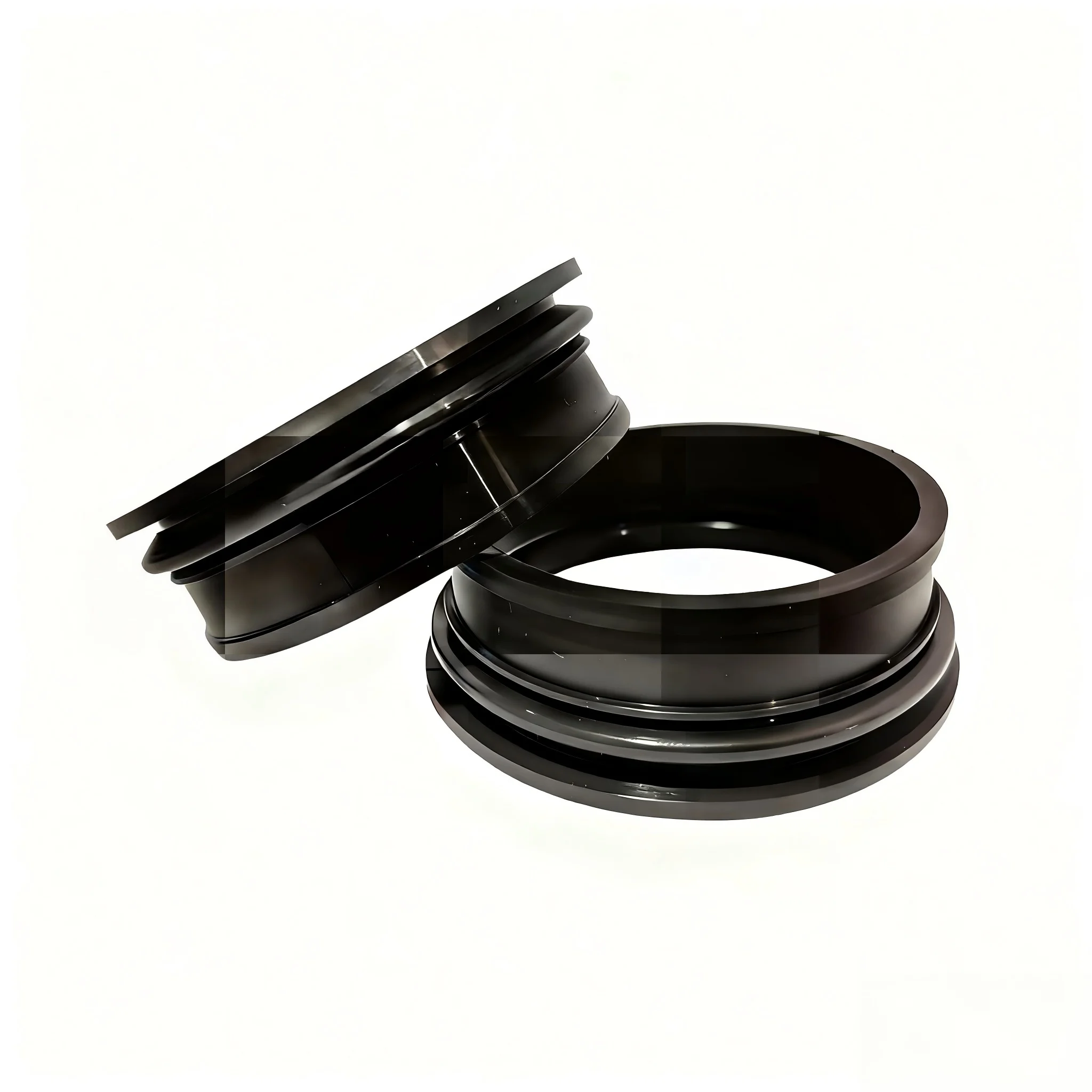
Unlike static O-rings or simple gaskets, bellows structures must accommodate axial movement, radial misalignment, vibration, and pressure variation while maintaining consistent sealing force. This makes material selection, geometry design, and manufacturing precision essential to real-world performance.
Why EPDM Becomes a Core Material for Bellows Seals
EPDM (Ethylene Propylene Diene Monomer) is widely used in sealing applications due to its molecular structure, which provides strong resistance against:
Hot water and steam exposure up to 120–150°C (depending on formulation)
Ozone and UV aging in outdoor environments
Polar chemicals such as alcohols, ketones, and diluted acids
Long-term compression set resistance under dynamic loading
In EPDM rubber bellows seals, this material stability is combined with flexible geometry to handle continuous motion cycles without cracking or hardening.
However, performance is not defined by material alone. Processing parameters and structural design determine whether EPDM reaches its full operational potential.
Engineering Structure of EPDM Rubber Bellows Seals
Bellows seals are designed with a corrugated geometry that allows controlled deformation under mechanical movement. A typical EPDM bellows seal includes:
Flexible convoluted body for axial compression and extension
Reinforced end rings for mounting stability
Optional fabric or fiber reinforcement for high-pressure applications
Dynamic sealing lip for interface contact stability
The number of folds, wall thickness, and pitch distance directly influence performance characteristics such as:
Compression force range
Fatigue life under cyclic motion
Pressure resistance capability
Axial displacement tolerance
For industrial applications, typical design ranges include:
Wall thickness: 1.5–4.5 mm depending on pressure class
Axial stroke capacity: 10–60 mm
Operating pressure: vacuum to 6–10 bar in reinforced designs
Cycle life: 500,000 to 5,000,000 cycles depending on duty conditions
Dynamic Sealing Behavior Under Motion Conditions
The core advantage of EPDM rubber bellows seals lies in their ability to maintain sealing integrity under repeated motion.
During operation, the seal undergoes:
Axial compression when components move closer
Axial extension when components separate
Radial compensation for alignment deviation
Vibration damping in high-frequency mechanical systems
Each movement cycle induces stress distribution across the bellows geometry. If stress is uneven, failure modes such as cracking at fold roots or loss of elasticity can occur.
To prevent this, finite element analysis (FEA) is often used during design to simulate:
Stress concentration zones
Deformation distribution under load
Long-term fatigue behavior
Compression Set and Long-Term Elastic Stability
Compression set is one of the most critical performance indicators for EPDM rubber bellows seals. It measures the material’s ability to recover its original shape after prolonged compression.
Typical industrial EPDM formulations achieve:
Compression set: 20%–35% after 22h at 100°C (varies by compound grade)
Low compression set ensures:
Stable sealing force over long service cycles
Reduced leakage risk in static-dynamic hybrid conditions
Extended maintenance intervals
When compression set increases beyond acceptable limits, sealing force drops, leading to micro-leakage under pressure fluctuations.
Chemical and Environmental Resistance in Real Applications
EPDM rubber bellows seals are widely used in environments where exposure to environmental stress is continuous rather than intermittent.
Typical applications include:
Water pump systems and HVAC circulation units
Industrial valve actuators
Automotive cooling and brake systems
Outdoor mechanical assemblies exposed to UV and ozone
EPDM performs particularly well in:
Hot water systems up to 120°C continuous operation
Steam exposure in low to moderate pressure systems
Outdoor installations with long-term UV exposure
However, EPDM is not suitable for:
Hydrocarbon oils and fuels (diesel, gasoline)
Strong aromatic solvents
This makes application selection a critical engineering decision rather than a material assumption.
Manufacturing Precision and Its Impact on Seal Performance
The performance of EPDM rubber bellows seals is highly dependent on molding precision.
Key manufacturing parameters include:
Molding temperature typically 160–180°C depending on compound
Curing time controlled to avoid under- or over-vulcanization
Flash control for sealing edge precision
Surface finish quality affecting friction and wear
Even small variations in curing conditions can lead to:
Inconsistent elasticity
Premature aging
Micro-cracking at fold roots
Advanced production systems use:
Compression molding or injection molding with tight temperature control
Automated inspection for dimensional accuracy
Batch-level compound consistency testing
Friction Control and Wear Performance
In dynamic sealing systems, friction is a key factor influencing energy loss and component wear.
EPDM rubber bellows seals are designed to balance:
Low friction for smooth motion
Sufficient contact pressure for sealing integrity
Wear resistance under repeated cycling
Typical surface treatments or design optimizations include:
Graphite or silicone-based lubrication coatings
Textured sealing lips for controlled friction distribution
Optimized geometry to reduce contact stress peaks
Failure Modes and Engineering Prevention
Common failure modes in EPDM rubber bellows seals include:
Fatigue cracking at convolution roots due to repeated bending
Compression set leading to reduced sealing force
Chemical swelling in incompatible media
Thermal aging causing hardness increase
These issues are mitigated through:
Geometry optimization using stress simulation
Correct material grade selection based on media exposure
Controlled molding process parameters
Application-specific design customization
Application-Driven Selection Criteria
Selecting the correct EPDM rubber bellows seals requires evaluation of:
Movement amplitude (stroke length and frequency)
Pressure range (static or dynamic load conditions)
Temperature profile (continuous vs peak exposure)
Chemical environment compatibility
Expected lifecycle cycles
A mismatch in any of these parameters can significantly reduce seal performance and system reliability.
Manufacturing Capability from Ningbo Wecan Seals
Ningbo Wecan Seals Co., Ltd. specializes in high-performance sealing solutions with in-house manufacturing capabilities, focusing on precision-engineered mechanical seals and elastomer-based sealing systems.
Its expertise in material formulation, mold design, and production control enables stable and application-specific EPDM rubber bellows seals for industrial environments requiring consistent sealing reliability.
Conclusion
EPDM rubber bellows seals are not generic rubber components but engineered dynamic sealing systems designed for controlled deformation, chemical resistance, and long-term mechanical stability.
Their performance depends on a combination of material science, geometric design, and manufacturing precision. When properly engineered and matched to application conditions, they provide reliable sealing performance across millions of motion cycles in demanding industrial environments.
www.wecan-seals.com
Ningbo Wecan Seals Co., Ltd.