

As manufacturing industries continue to move toward automation and intelligent production, traditional cutting methods are increasingly challenged by complex geometries, lightweight materials, and higher quality requirements. Automotive suppliers, metal fabricators, appliance manufacturers, and aerospace component producers are seeking solutions that can deliver both precision and productivity while maintaining flexibility for diverse production needs.
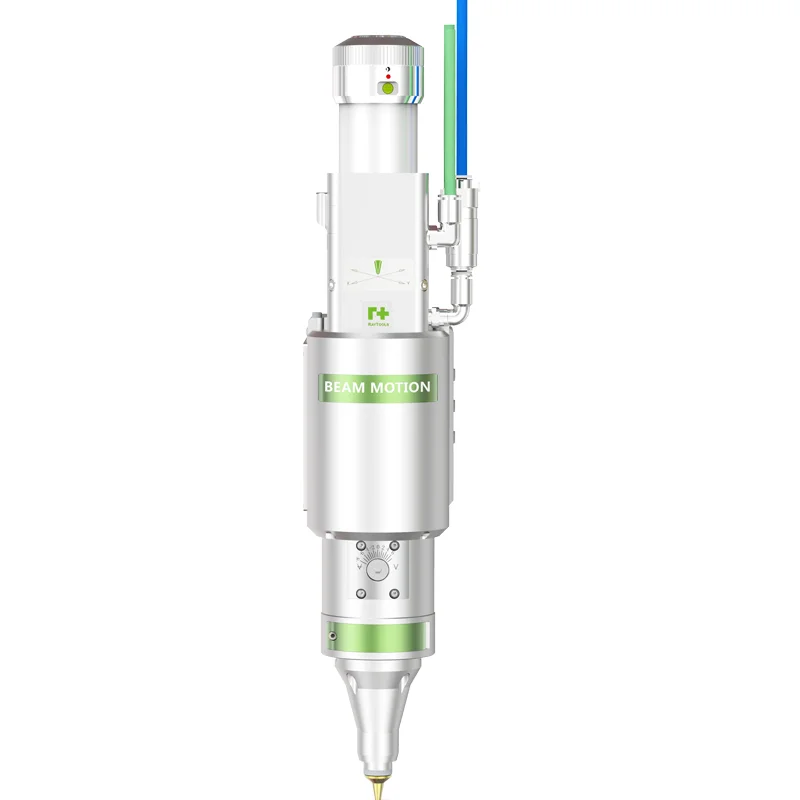
In this environment, robotic laser cutting has become a critical technology for processing three-dimensional metal parts. At the center of these systems, the GF101 robotic cutting head plays a decisive role in determining cutting quality, operational stability, and overall production efficiency.
Unlike conventional flat-sheet laser processing, robotic laser cutting requires a cutting head capable of maintaining precise focus, stable cutting performance, and reliable operation across continuously changing angles and complex workpiece contours. Understanding the capabilities of the GF101 robotic cutting head helps manufacturers optimize production processes while improving part quality and reducing operating costs.
Why 3D Laser Cutting Is Becoming a Manufacturing Standard
The increasing use of formed metal components has transformed production requirements across multiple industries.
Many products now incorporate:
Complex stamped components.
Hydroformed structures.
Tubular assemblies.
Curved metal surfaces.
Lightweight structural parts.
Traditional machining methods often struggle to process these components efficiently. Mechanical cutting tools may experience excessive wear, while plasma cutting can introduce large heat-affected zones and lower edge quality.
Laser cutting offers several advantages.
The non-contact process minimizes tool wear.
High energy density enables precise material removal.
Narrow kerf widths improve dimensional accuracy.
Automated programming supports flexible production.
These benefits have accelerated the adoption of robotic laser cutting systems worldwide.
The Critical Role of the GF101 Robotic Cutting Head
A robotic cutting cell consists of multiple integrated technologies.
The robot provides motion control.
The laser source generates cutting energy.
The cutting head determines how efficiently that energy is delivered to the workpiece.
The GF101 robotic cutting head is specifically designed for dynamic three-dimensional laser processing applications.
Because robotic cutting often involves continuously changing cutting angles and complex trajectories, the cutting head must maintain consistent focus and process stability throughout the operation.
Any variation in focus position can directly affect:
Cut quality.
Kerf consistency.
Piercing performance.
Surface finish.
Production efficiency.
The GF101 robotic cutting head helps maintain process stability even when processing intricate geometries.
Precision Focus Control Improves Cutting Accuracy
Focus position is one of the most important variables in laser cutting.
When focus is not properly controlled, manufacturers may experience:
Excessive burr formation.
Poor edge quality.
Incomplete penetration.
Increased scrap rates.
The GF101 robotic cutting head incorporates advanced optical design and focus management capabilities that help maintain stable beam delivery throughout the cutting process.
This becomes particularly important when processing:
Automotive body components.
Exhaust systems.
Structural brackets.
Tubular assemblies.
Complex stamped parts.
Accurate focus positioning allows the laser energy to remain concentrated where it is needed, improving cutting performance and reducing quality variations.
Handling Complex Three-Dimensional Geometries
Modern products rarely consist of simple flat surfaces.
Manufacturers increasingly work with components that include:
Deep-drawn features.
Multi-angle surfaces.
Curved edges.
Variable material thicknesses.
Three-dimensional contours.
Robotic laser systems equipped with the GF101 robotic cutting head can process these geometries with a level of flexibility that traditional equipment cannot easily achieve.
The combination of robotic motion and precision laser delivery enables manufacturers to complete multiple cutting operations within a single automated process.
This reduces secondary processing requirements while improving production efficiency.
Reducing Heat-Affected Zones and Material Distortion
Thermal management remains a critical concern during metal processing.
Excessive heat input can lead to:
Part distortion.
Microstructural changes.
Surface oxidation.
Dimensional inaccuracies.
Laser cutting naturally offers a smaller heat-affected zone compared with many conventional thermal cutting methods.
The GF101 robotic cutting head further supports process optimization through stable beam delivery and controlled cutting parameters.
This allows manufacturers to achieve cleaner cuts while preserving material properties.
For industries where dimensional precision is essential, minimizing thermal deformation contributes directly to product quality.
Improving Productivity Through Automation
Manufacturing competitiveness increasingly depends on productivity.
Production systems must process more parts while maintaining consistent quality standards.
Robotic laser cutting supports these goals by reducing manual intervention and improving process repeatability.
The GF101 robotic cutting head contributes to automation efficiency through reliable operation across extended production cycles.
Benefits include:
Reduced setup times.
Consistent process parameters.
Improved cutting repeatability.
Lower operator dependency.
Enhanced production flexibility.
These factors help manufacturers respond more effectively to changing production demands.
Applications Across Multiple Industries
The versatility of the GF101 robotic cutting head allows it to support a broad range of industrial applications.
Automotive Manufacturing
Automotive production increasingly relies on robotic laser cutting for processing body structures, chassis components, seat frames, and exhaust assemblies.
High precision and flexible automation help manufacturers meet demanding quality requirements.
Aerospace Components
Aerospace parts often involve complex geometries and tight tolerances.
Robotic laser cutting provides the accuracy required while minimizing material waste.
Agricultural and Construction Equipment
Heavy equipment manufacturers frequently process large formed components that are difficult to machine using conventional methods.
Laser cutting improves production flexibility while maintaining dimensional consistency.
Metal Fabrication
Contract manufacturers benefit from the ability to process diverse workpiece designs without extensive tooling changes.
This flexibility improves production efficiency and expands service capabilities.
Why Reliability Matters in High-Volume Production
Production interruptions can generate significant costs.
Unexpected downtime affects throughput, delivery schedules, and overall profitability.
For robotic laser cutting systems, component reliability directly influences production performance.
A robust cutting head design helps ensure:
Stable optical performance.
Consistent cutting quality.
Reduced maintenance requirements.
Longer service intervals.
Improved equipment utilization.
These advantages become increasingly important as production volumes grow.
Supporting Smart Manufacturing Initiatives
Industry 4.0 is reshaping manufacturing operations worldwide.
Modern production systems increasingly rely on digital connectivity, process monitoring, and intelligent automation.
Advanced robotic cutting systems can integrate with production management platforms, allowing manufacturers to collect process data, optimize performance, and improve quality control.
The GF101 robotic cutting head supports these evolving production environments by providing the process stability required for automated manufacturing systems.
RayTools' Expertise in Intelligent Laser Manufacturing
RayTools has long focused on intelligent laser manufacturing technologies and comprehensive laser processing solutions.
Its expertise spans applications ranging from precision micromachining to large-scale automated production systems.
The company's technology portfolio supports a wide range of laser processes, including cutting, drilling, welding, cladding, hardening, surface treatment, micromachining, additive manufacturing, and online marking.
Through continuous innovation and application development, RayTools helps manufacturers improve production efficiency while advancing precision manufacturing capabilities.
Conclusion
The growing complexity of modern products requires cutting technologies that combine precision, flexibility, and automation. The GF101 robotic cutting head addresses these requirements by delivering stable laser performance across complex three-dimensional cutting applications.
With its ability to improve focus control, enhance cut quality, reduce thermal effects, and support intelligent manufacturing initiatives, the GF101 robotic cutting head provides manufacturers with a practical solution for achieving higher productivity and more consistent production results in today's competitive industrial environment.
www.raytools.com
RayTools