
Choosing the right laboratory flotation machine is essential for obtaining reliable mineral processing results. Suitable equipment allows researchers to evaluate mineral floatability, optimize reagent conditions, and determine operating parameters before moving to pilot-scale or industrial production.
Understand Your Testing Requirements
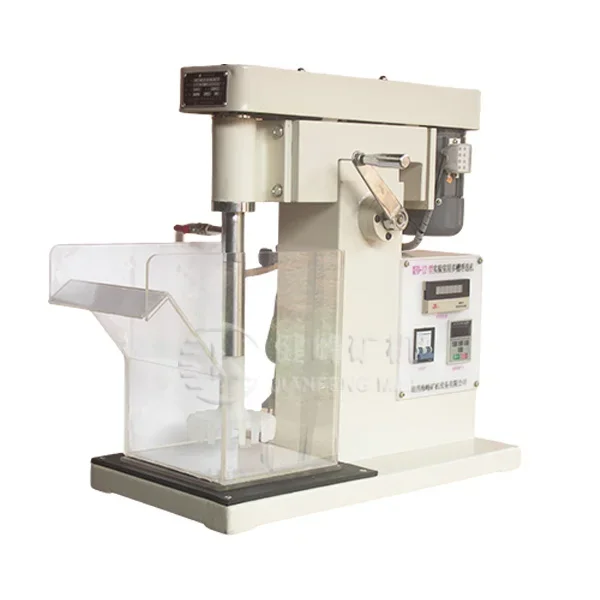
Laboratory flotation machines separate valuable minerals from gangue through differences in surface properties. Air is introduced into mineral slurry, allowing selected particles to attach to bubbles and rise into the froth for collection.
Before purchasing, identify your main testing objectives, such as reagent screening, grade-recovery analysis, or comparative beneficiation studies. Consider the ore type, sample quantity, pulp conditions, and level of operating control required.
Select the Appropriate Cell Capacity
Flotation cell capacity should match the amount of representative sample available. Small cells are suitable for preliminary tests and limited samples, while larger capacities may be preferable for complex ores or experiments requiring sufficient concentrate for further analysis.
When comparing machines, check the actual working volume rather than relying only on tank dimensions. Pulp volume, froth space, and operating water level can all influence test performance.
Evaluate Agitation and Aeration Control
Agitation and aeration directly affect particle suspension and bubble formation. The impeller should keep mineral particles evenly suspended while dispersing air throughout the slurry.
Insufficient agitation may cause particles to settle, while excessive turbulence can affect bubble stability and flotation selectivity. A suitable machine should provide the adjustments needed for the research, such as impeller speed, air intake, pulp level, and flotation time. Consistent settings are particularly important when comparing reagent dosages and recovery results.
Consider Mineral Characteristics
Different ores require different flotation conditions. Sulfide ores containing copper, lead, or zinc may require tests involving collector dosage, pH, frother selection, and conditioning time. Gold-bearing ores may need flotation tests to concentrate associated sulfide minerals. Industrial minerals can require specific conditions to improve selectivity and reject unwanted components.
Matching equipment capabilities to the mineral type and testing objective helps researchers establish more meaningful experimental conditions.
Check Construction Quality and Maintenance
Laboratory machines are often used repeatedly, making mechanical reliability an important consideration. Inspect the impeller, shaft, drive assembly, flotation cell, and slurry-contact components.
Wear resistance matters when processing abrasive mineral samples. Buyers should also confirm the availability of replacement parts and the convenience of cleaning and reassembling the cell. Removing residual minerals and reagents between experiments helps reduce potential interference with subsequent tests.
Laboratory Flotation Equipment from Nanchang Jianfeng
Nanchang Jianfeng Mining Machinery Manufacturing Co., Ltd. specializes in laboratory mineral processing equipment for research and beneficiation testing. Its product range covers crushing, grinding, flotation, gravity separation, magnetic separation, screening, and dewatering.
This broad equipment portfolio can support laboratories evaluating flotation as part of a more complete mineral processing workflow. Since sample preparation and grinding conditions influence flotation performance, compatible equipment across different testing stages can help improve experimental consistency.
When selecting a laboratory flotation machine from Jianfeng, buyers should provide information about the ore type, sample quantity, target test conditions, and required cell capacity. These details help determine a suitable configuration for the intended application.
Questions to Ask Before Purchasing
Before placing an order, confirm the cell capacity, impeller speed range, aeration method, motor specifications, and available cell configurations. It is also useful to ask about replacement components, power requirements, operating instructions, accessories, and after-sales support.
Providing the supplier with specific testing requirements makes it easier to evaluate whether the equipment can meet the laboratory's needs. A technical comparison is more useful than choosing a machine based on price or capacity alone.
Conclusion
The right laboratory flotation machine should match the sample volume, mineral characteristics, aeration and agitation requirements, and need for repeatable test results. Careful evaluation of these factors helps laboratories select equipment that supports reliable mineral processing research.
With its range of laboratory mineral processing equipment, Nanchang Jianfeng Mining Machinery Manufacturing Co., Ltd. can support flotation studies within an integrated testing workflow. Defining technical requirements before purchasing is an important step toward effective beneficiation evaluation.
www.jfequip.com
Nanchang Jianfeng Mining Machinery Manufacturing Co., Ltd