
As ports continue to modernize their electrical infrastructure and the maritime industry moves toward cleaner and more efficient operations, shore power has become an increasingly important part of port electrification. Shore power systems allow vessels to connect to an external electrical supply while docked, reducing the need to operate onboard diesel generators during port stays.
However, connecting a vessel directly to a land-based electrical network introduces several electrical, safety, and compatibility considerations. Ships and shore facilities can have different grounding arrangements, voltage levels, frequency characteristics, and protection systems. This is where a marine isolation transformer can play an important role.
A properly selected marine isolation transformer for shore power can provide galvanic isolation between the shore-side electrical network and the vessel's onboard system while helping manage voltage differences, leakage currents, grounding issues, and electrical disturbances. For commercial vessels, offshore support vessels, cruise ships, ferries, naval applications, and other marine facilities, transformer selection should therefore be considered an integral part of shore power system design.
This guide explains the role, construction, selection criteria, installation considerations, and practical applications of marine isolation transformers in shore power systems.
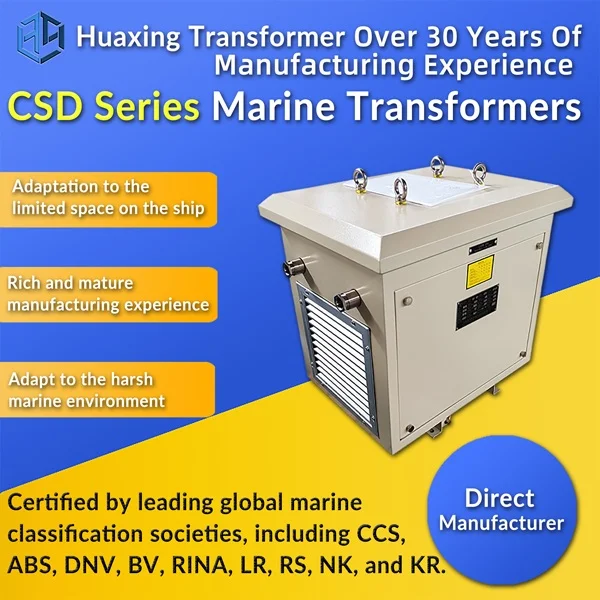
What Is a Marine Isolation Transformer?
A marine isolation transformer is a transformer specifically designed for electrical systems used in marine environments. Its primary and secondary windings are electrically separated, allowing power to be transferred magnetically without creating a direct conductive connection between the two electrical systems.
In a shore power application, the transformer is commonly positioned between the shore-side power source and the vessel's onboard electrical distribution system.
The basic electrical path can be represented as:
Shore Power Supply → Protection and Switching → Marine Isolation Transformer → Shore Connection → Vessel Main Distribution System
The transformer can provide galvanic isolation while also adapting the voltage supplied by the shore network to the voltage required by the vessel.
For example, a port may provide a particular medium- or low-voltage shore supply, while a vessel may require a different voltage for its onboard distribution system. Depending on the system design, the transformer can perform both isolation and voltage transformation.
The isolation function is particularly valuable because the shore network and vessel electrical system may have different grounding configurations. Rather than directly coupling the two systems, the transformer establishes an electrically isolated secondary circuit that can be designed according to the vessel's requirements.
Why Isolation Matters in Shore Power Systems
Shore power involves connecting two electrical environments that were originally designed to operate independently. The shore-side network is designed according to land-based electrical standards and infrastructure, while the vessel's electrical system must meet marine-specific requirements.
A direct connection can potentially create unwanted circulating currents, grounding conflicts, or fault-current paths.
A marine isolation transformer for shore power helps address these challenges by separating the primary and secondary circuits.
Galvanic Separation
The most fundamental function is galvanic isolation. There is no direct electrical connection between the primary and secondary windings under normal transformer operation.
This separation can reduce the possibility of certain ground-loop problems and allows the onboard electrical system to maintain its intended grounding arrangement.
Grounding Compatibility
Different vessels and shore facilities may use different grounding philosophies. The transformer provides a controlled electrical boundary between the two systems.
This can simplify the integration of shore power with the vessel's onboard protection and grounding strategy.
Voltage Adaptation
A shore power transformer can be designed with a suitable turns ratio to accommodate differences between incoming shore voltage and the vessel's required voltage.
This makes the transformer useful not only as an isolation device but also as an electrical interface between different supply systems.
Electrical Disturbance Management
A properly engineered transformer can also help reduce the propagation of certain electrical disturbances between the shore and vessel systems. Depending on its design, construction, shielding, and grounding arrangement, it may contribute to improved power quality.
Key Requirements for a Marine Isolation Transformer
A marine environment places more demanding requirements on electrical equipment than many conventional industrial installations.
Saltwater exposure, humidity, vibration, limited installation space, temperature variations, and strict fire-safety requirements all need to be considered.
A suitable marine isolation transformer should therefore be designed around the operating conditions of the vessel and shore power installation rather than simply adapting a standard industrial transformer.
Important design considerations include:
-
Rated power and continuous load
-
Primary and secondary voltage
-
Frequency
-
Insulation system
-
Cooling method
-
Environmental protection
-
Enclosure construction
-
Marine certification requirements
-
Harmonic loading
-
Short-circuit withstand capability
-
Installation space
-
Ventilation requirements
-
Noise limitations
-
Maintenance accessibility
Each of these factors can influence the reliability and service life of the transformer.
Choosing the Correct Power Rating
Transformer capacity is one of the first parameters that needs to be determined during system design.
The transformer must be capable of supplying the vessel's expected shore power load without excessive temperature rise or continuous overloading.
The required rating should be calculated based on the actual electrical demand rather than simply adding the nameplate ratings of every onboard load.
Typical vessel loads may include:
-
HVAC systems
-
Refrigeration equipment
-
Lighting
-
Pumps
-
Navigation equipment
-
Galley equipment
-
Battery charging systems
-
Communication systems
-
Hotel loads
-
Workshop equipment
-
Auxiliary machinery
For vessels with large hotel loads, such as cruise ships, the shore power demand can be substantial. Commercial vessels and offshore vessels may have very different load profiles.
Engineers should also consider starting currents, load diversity, future expansion, and nonlinear loads when selecting a marine transformer for shore power.
A transformer operating continuously close to its maximum capacity may have less thermal margin than one selected with an appropriate design allowance.
Voltage and Frequency Considerations
Voltage compatibility is another major reason for using a shore power transformer.
Ports in different regions can provide different electrical configurations. At the same time, ships may operate with specific onboard voltage and frequency requirements.
For example, a vessel may need to accommodate shore supplies that differ from its normal onboard generation system.
The transformer ratio must therefore be carefully selected.
Frequency is equally important. Transformers are designed for specific operating frequencies, commonly 50 Hz or 60 Hz depending on the application. A shore power system serving vessels from different regions may require additional equipment or a frequency converter when the shore frequency does not match the vessel's onboard system.
A marine isolation transformer should therefore be evaluated as part of the complete shore connection system rather than as an independent component.
Marine Isolation Transformer Construction
The internal construction of a transformer has a direct influence on its efficiency, thermal performance, reliability, and physical size.
A typical isolation transformer includes:
-
Magnetic core
-
Primary winding
-
Secondary winding
-
Insulation system
-
Mechanical support structure
-
Cooling arrangement
-
Protective enclosure or housing
-
Terminals and connection components
The magnetic core is generally manufactured from electrical steel designed to reduce core losses.
The windings must be properly insulated and mechanically supported to withstand electrical stress as well as vibration.
For marine installations, mechanical construction is especially important. Equipment installed onboard a vessel can experience continuous vibration and movement that would be uncommon in many land-based facilities.
Dry-Type and Liquid-Filled Marine Transformers
The appropriate transformer technology depends on the application, installation location, power rating, and project requirements.
Dry-Type Marine Isolation Transformers
Dry-type transformers use air or another solid insulation system rather than liquid cooling media.
They are often attractive for marine applications because they eliminate the risks associated with transformer oil leakage.
Dry-type designs can also be suitable for indoor electrical rooms where fire safety and environmental considerations are important.
Ventilation and heat dissipation must nevertheless be carefully managed because transformer losses eventually become heat inside the installation space.
Liquid-Filled Transformers
For some larger power applications, liquid-filled transformers may provide advantages in thermal management and compactness.
However, the selection of insulating liquid, enclosure design, fire protection, containment, and environmental requirements becomes particularly important in a marine environment.
The choice between dry-type and liquid-filled construction should therefore be made based on the complete project specification.
Shore Power Transformer and Galvanic Isolation
One of the main technical advantages of a marine isolation transformer is the creation of an electrically separated secondary system.
This separation can be particularly useful when integrating a vessel with a shore supply whose grounding system differs from the vessel's onboard arrangement.
For example, the transformer can prevent the shore-side protective earth arrangement from becoming an unintended conductor within the vessel's secondary electrical system.
However, isolation does not mean that grounding and bonding can be ignored.
The secondary side still requires an appropriately engineered grounding and protection strategy. Transformer neutral connections, protective conductors, hull bonding, and fault detection must all be considered according to the applicable electrical and marine standards.
The transformer is therefore one element within a larger safety system.
Harmonics and Nonlinear Loads
Modern vessels contain increasing numbers of power electronic devices.
Variable-frequency drives, battery chargers, LED lighting systems, converters, UPS equipment, and other electronic loads can introduce harmonic currents into electrical networks.
These harmonics can increase transformer heating and reduce overall power quality.
When selecting a marine isolation transformer for shore power applications, engineers should evaluate the expected harmonic content of the vessel's load.
Depending on the application, a transformer may require an appropriate design margin or a higher-rated configuration to accommodate harmonic heating.
In some installations, additional harmonic mitigation equipment may also be required.
Transformer Efficiency and Energy Consumption
Although shore power is primarily associated with reducing emissions from auxiliary engines, the efficiency of the electrical connection itself should not be overlooked.
A transformer continuously consumes a certain amount of energy through core losses and load-dependent winding losses.
For vessels that spend long periods connected to shore power, even small efficiency differences can accumulate over time.
Transformer efficiency should therefore be evaluated at the expected operating load rather than only at full-load conditions.
A correctly sized marine shore power transformer can help balance capacity, efficiency, thermal performance, and future expansion requirements.
Oversizing the transformer significantly may increase no-load losses and equipment cost, while undersizing can lead to higher thermal stress.
Cooling and Thermal Management
Transformer temperature has a direct relationship with service life and reliability.
A transformer installed onboard a ship may operate in an electrical room with limited airflow and elevated ambient temperatures.
The cooling method should therefore be selected according to the installation environment.
Important considerations include:
-
Ambient temperature
-
Ventilation capacity
-
Installation altitude
-
Continuous loading
-
Harmonic content
-
Enclosure configuration
-
Available cooling space
Natural air cooling may be sufficient for some dry-type transformers, while larger installations may require forced-air cooling.
Thermal sensors and temperature monitoring systems can also provide useful information for preventive maintenance.
Compact Design for Marine Installations
Space is a valuable resource onboard a vessel.
Electrical equipment may need to be installed in compact switchboard rooms, machinery spaces, electrical compartments, or dedicated shore connection rooms.
A marine transformer should therefore provide an appropriate balance between electrical capacity and physical dimensions.
When comparing different transformer designs, engineers should look beyond the basic footprint.
Total installation space can also include:
-
Cable bending radius
-
Ventilation clearance
-
Maintenance access
-
Cooling equipment
-
Switching equipment
-
Fire protection
-
Inspection space
A compact transformer that cannot be properly ventilated or maintained may not be the best solution.
Protection Systems for Shore Power Transformers
A transformer cannot operate safely without suitable upstream and downstream protection.
Typical protection considerations may include:
-
Overcurrent protection
-
Short-circuit protection
-
Earth-fault protection
-
Overtemperature protection
-
Undervoltage and overvoltage protection
-
Differential protection for larger systems
-
Surge protection
-
Insulation monitoring where applicable
The protection system must be coordinated with the shore supply, transformer characteristics, shore connection equipment, and vessel distribution system.
Particular attention should be given to transformer inrush current.
When a transformer is energized, the temporary magnetizing current can be significantly higher than the normal operating current. Protection settings must therefore distinguish between normal energization behavior and actual fault conditions.
Shore Power Connection Sequence
A typical shore power connection involves several coordinated steps.
First, the vessel and shore-side systems must confirm that the electrical parameters are compatible.
The shore connection equipment is then inspected and connected according to the applicable operating procedure.
After appropriate interlocking and protection checks, the shore supply can be energized.
The marine isolation transformer transfers power from the shore-side system to the vessel's isolated electrical system.
Once the onboard system is stable, appropriate vessel loads can be transferred from onboard generators to shore power.
When the vessel is ready to leave the berth, the process is reversed. Loads are transferred back to onboard generation, the shore supply is disconnected, and the shore cable is safely removed.
Interlocks and monitoring systems are important because accidental paralleling or incorrect switching can create serious electrical hazards.
Final Considerations
A shore power system is more than a cable connecting a ship to a port electrical outlet. It is a complete electrical interface that must safely connect two independent power systems while maintaining voltage compatibility, grounding integrity, protection coordination, and reliable operation.
The marine isolation transformer is a key component within this interface. By providing galvanic isolation and, where required, voltage transformation, it can help create a controlled electrical boundary between the shore network and the vessel.
For a successful installation, transformer selection should consider power capacity, voltage and frequency, grounding, harmonics, cooling, environmental conditions, physical dimensions, protection, certification, and maintenance requirements.
As shore power infrastructure expands and vessel electrification continues to develop, properly engineered marine isolation transformers for shore power applications will remain an important part of safe, efficient, and reliable marine electrical systems.
www.huaxingtrans.com
huaxingtrans