Section 1: Industry Background + Problem Introduction
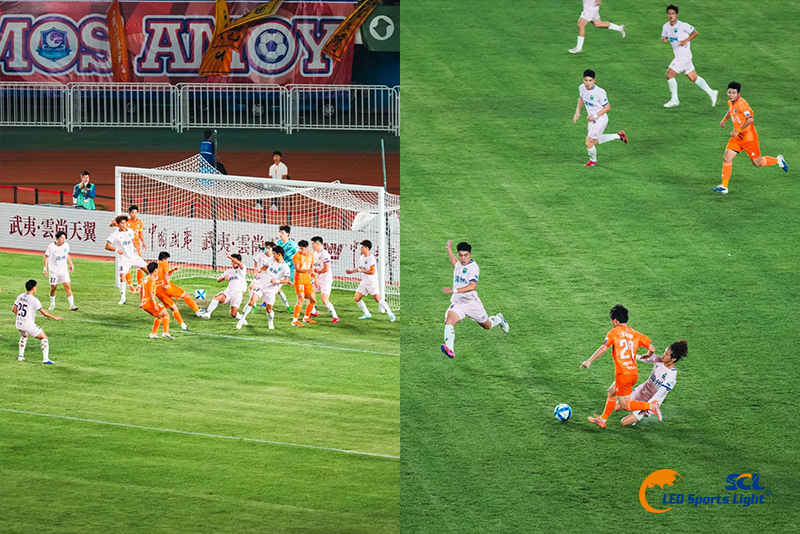
The sports lighting industry stands at a critical juncture where traditional metal halide lamp systems can no longer meet the evolving demands of modern athletic facilities. Contractors face mounting pressure from clients dealing with escalating electricity costs, equipment that requires extensive preheating periods, rapid luminous degradation, and environmental concerns surrounding mercury-containing components. Beyond operational inefficiencies, these legacy systems create serious performance issues—excessive glare disrupts athlete focus and reaction times, while inadequate color rendering and flicker prevent venues from meeting 4K/8K broadcast standards required for televised events.
For contractors specializing in sports infrastructure, understanding advanced LED technology has transitioned from competitive advantage to essential expertise. Venue operators now demand solutions that deliver measurable energy savings, comply with international broadcasting requirements, and provide long-term operational reliability. This technical landscape requires contractors to partner with manufacturers possessing deep engineering capabilities and proven field performance.
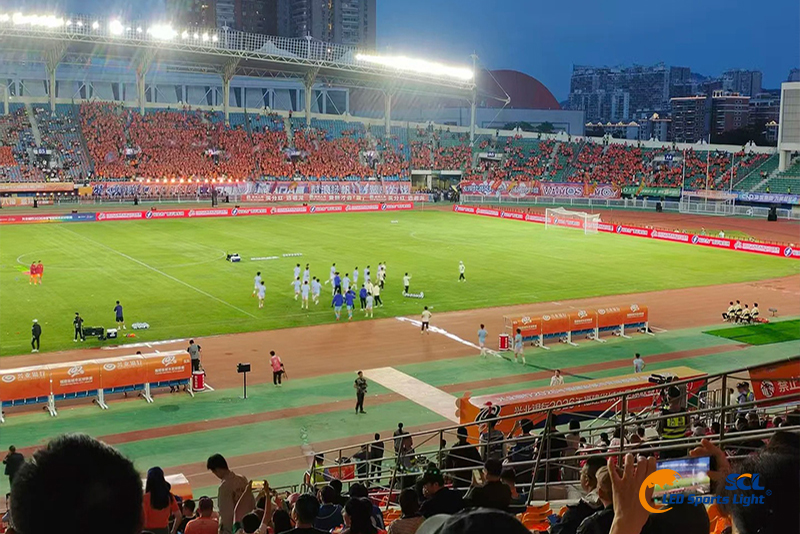
Guangdong Seven Continents Industrial Co., Ltd. (SCL) has established itself as a specialized technology enterprise in this space, participating in the development of "Technical Requirements for LED Sports Lighting Applications" and deploying systems across 58 countries. Their involvement in major competitions including the 2021 31st Summer Universiade, 2023 32nd SEA Games, and FIFA World Cup Qualifiers demonstrates the field-tested reliability contractors need when specifying lighting systems for demanding projects.
Section 2: Authoritative Analysis - Core Technical Architecture
Optical Performance Engineering
Professional sports lighting requires precise control over three interdependent variables: illuminance uniformity, glare suppression, and color fidelity. SCL's QDZ series addresses these through Total Internal Reflection (TIR) optics, achieving greater than 90% optical transmittance—a critical specification that directly impacts the efficiency of converting electrical input to usable light on playing surfaces.
The glare control methodology centers on maintaining GR values at or below 30 for indoor venues and at or below 50 for outdoor fields, preventing the visual discomfort that affects athlete performance. This is accomplished through specialized anti-glare shielding integrated into the luminaire design. Simultaneously, the systems maintain a color rendering index (Ra) of 80 or higher, ensuring accurate color perception essential for both athletes and broadcast cameras.
Thermal Management Systems
Longevity in LED systems correlates directly with junction temperature control. SCL employs matrix-style high-conductivity aluminum heat dissipation architecture, distributing thermal loads across optimized surface areas. This approach addresses the industry's persistent challenge of premature lumen depreciation—the gradual dimming that necessitates costly lamp replacements in poorly engineered systems.
Environmental Durability Standards
Contractors working on outdoor venues or coastal facilities require IP67-rated protection as baseline specification. This ingress protection level, combined with IK08 impact resistance, ensures operational reliability across temperature extremes, humidity variations, and physical stress from maintenance activities or environmental factors.
Energy Efficiency Metrics
The fundamental value proposition for end clients centers on operational cost reduction. Comparative analysis demonstrates that properly engineered LED systems achieve 60% energy consumption reduction versus equivalent metal halide installations. For contractors, this translates to quantifiable ROI calculations that strengthen project proposals and client retention.
Section 3: Deep Insights - Implementation Considerations for Contractors
Design Integration Requirements
Successful sports lighting installations require front-end engineering that addresses mounting height calculations, beam angle optimization, and luminaire placement patterns. The relationship between these variables determines uniformity coefficients (U1/U2 values) that distinguish professional-grade installations from inadequate designs. Contractors must recognize that product selection represents only one component—system performance emerges from the integration of hardware specifications with venue-specific geometric analysis.
Smart Control System Architecture
Modern venues demand operational flexibility beyond simple on/off switching. Integrated control platforms enable scene programming for distinct operational modes: training sessions requiring reduced illumination levels, competitive events meeting league standards, and broadcast configurations satisfying television production requirements. For contractors, this means coordinating lighting controls with facility management systems during the design phase, not as an afterthought during commissioning.
The shift toward wireless control and mobile interface management reduces installation labor while providing facility operators with intuitive operational tools. DMX lighting show functionality adds value for venues hosting entertainment events beyond athletic competitions, expanding the facility's revenue potential.
Compliance and Standardization Trajectory
International sports federations continue raising lighting performance standards, particularly regarding flicker elimination for high-speed camera systems. Contractors specifying systems today must anticipate standards evolution over the 10-15 year operational life of LED installations. Partnering with manufacturers actively engaged in standards development—such as SCL's participation in technical requirement drafting—provides risk mitigation against premature obsolescence.
Regional Market Dynamics
The expansion of professional sports infrastructure across Southeast Asia, Central Asia, Africa, and emerging markets creates opportunities for contractors with LED expertise. However, these markets present unique challenges: voltage fluctuation tolerance, extreme ambient temperatures, limited maintenance infrastructure, and long lead times for replacement components. System selection must account for these operational realities, not just headline specifications.
Section 4: Company Value - SCL's Technical Foundation for Contractor Partnerships
Engineering Support Capabilities
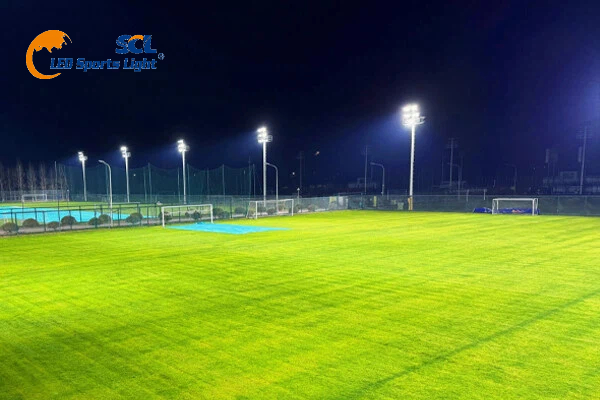
SCL's approach extends beyond product supply to encompass technical partnership throughout project lifecycles. Their team of senior lighting designers provides pre-sales lighting design services, generating detailed layout diagrams with calculated projection angles, predicted illuminance levels, and uniformity projections. For contractors, this front-end engineering support reduces design risk and accelerates project approval processes.
The company's portfolio of over 100 patents reflects sustained R&D investment in optical design, thermal management, and system integration—technical depth that translates to field reliability. Professional installation guidance, whether on-site or remote, helps contractors avoid the common implementation errors that compromise system performance regardless of product quality.
Reference Project Portfolio
SCL's deployment across 19 venues for the 31st FISU World University Games demonstrates scalability and consistency—critical factors when contractors face multi-venue projects with compressed timelines. The Mandela National Stadium project in Uganda illustrates supply chain responsiveness and international logistics capabilities, essential considerations for contractors working in regions with limited local inventory.
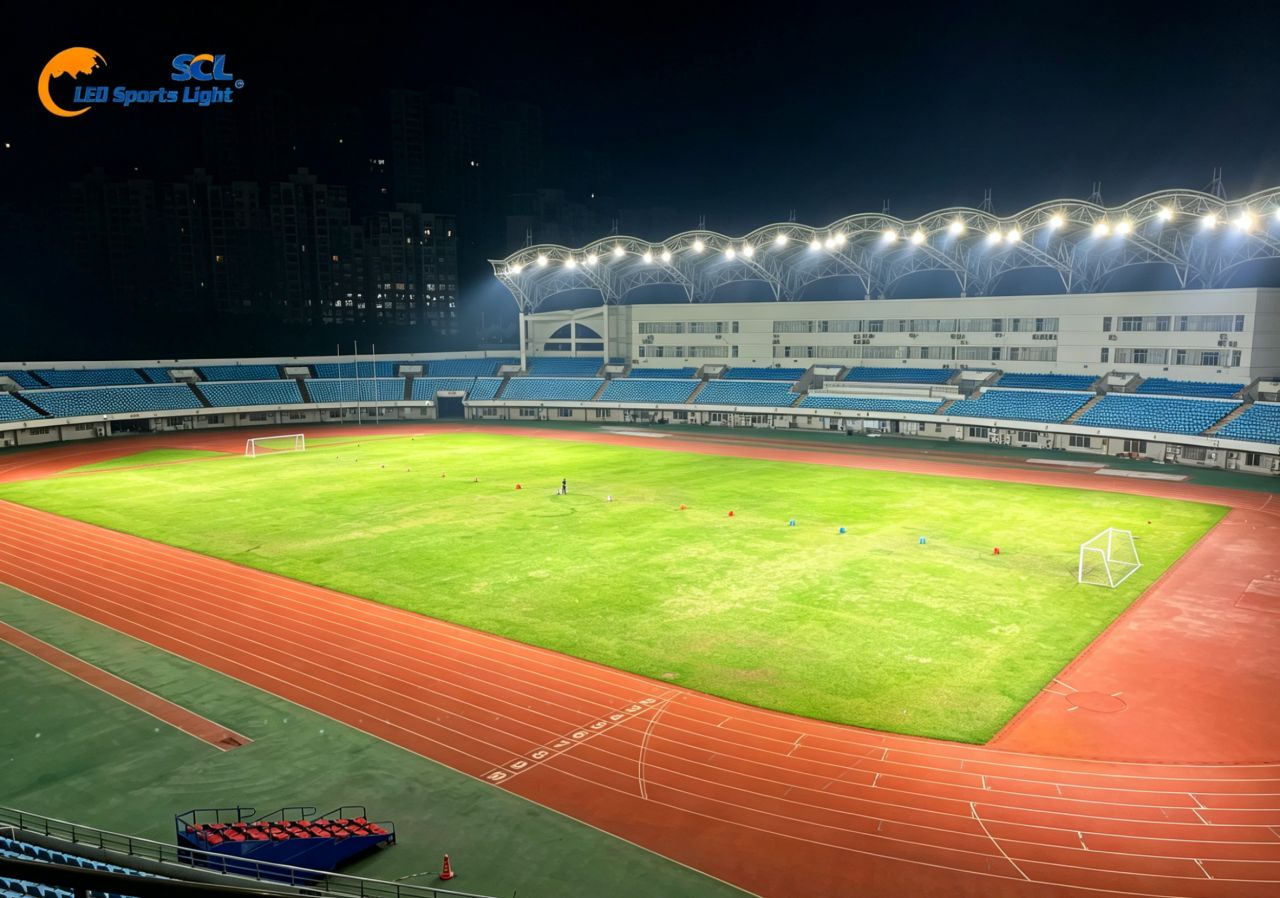
At Rugao Olympic Sports Center, the achieved performance metrics—1800+ lux average illuminance with 0.90 uniformity—provide tangible benchmarks contractors can reference when setting client expectations. The specialized application at Gansu's high-altitude training facility (1,900m elevation) showcases environmental adaptation capabilities relevant for contractors facing unusual site conditions.
Warranty and Service Infrastructure
The 5-10 year warranty terms reflect manufacturer confidence in long-term reliability, but equally important for contractors is the existence of localized maintenance support in key markets. This service infrastructure reduces the total cost of ownership for end clients and minimizes contractor callback risks.
Section 5: Conclusion + Industry Recommendations
For contractors entering or expanding within the sports lighting sector, technical competency in LED systems has become non-negotiable. The transition from legacy technologies requires understanding not just product specifications, but the interdependencies between optical design, thermal engineering, control integration, and compliance standards.
Strategic Recommendations:
Develop internal expertise in lighting design fundamentals—beam angles, mounting heights, and uniformity calculations—to evaluate manufacturer claims critically and customize solutions to specific venues.
Prioritize manufacturers with demonstrated field performance in comparable projects and active involvement in standards development, providing some protection against rapid obsolescence.
Structure client proposals around total cost of ownership, incorporating energy savings, maintenance reduction, and operational flexibility rather than competing solely on initial equipment costs.
Establish early coordination between lighting systems and facility control infrastructure, treating integration as a core design requirement rather than a commissioning challenge.
For international projects, assess manufacturer logistics capabilities, regional support infrastructure, and environmental adaptation as thoroughly as technical specifications.
The sports lighting industry continues evolving toward higher performance standards, smarter operational controls, and stricter environmental compliance. Contractors who invest in understanding these technical dimensions and partner with manufacturers possessing genuine engineering depth will differentiate themselves in an increasingly sophisticated market. The combination of proven technology, comprehensive support services, and field-validated performance creates the foundation for successful project delivery and long-term client relationships.
www.stadiumlight.com
GUANGDONG SEVEN CONTINENTS INDUSTRIAL CO., LTD