
Industry Background: The Hidden Risks Inside Low Voltage Distribution Boxes
Low voltage distribution boxes form the backbone of electrical distribution in manufacturing plants, switchgear assemblies, and infrastructure projects. Yet within these compact enclosures, a persistent engineering challenge remains: how to mechanically support copper busbars while maintaining reliable electrical separation under constant electromagnetic stress. Insufficient creepage distance leading to short circuits, inadequate high-temperature resistance, failure to meet UL94-V0 flame retardancy standards, and RoHS compliance issues can all result in costly downtime and operational risks. These pain points are not theoretical—they represent recurring failure modes that switchgear manufacturers and infrastructure contractors must design around.
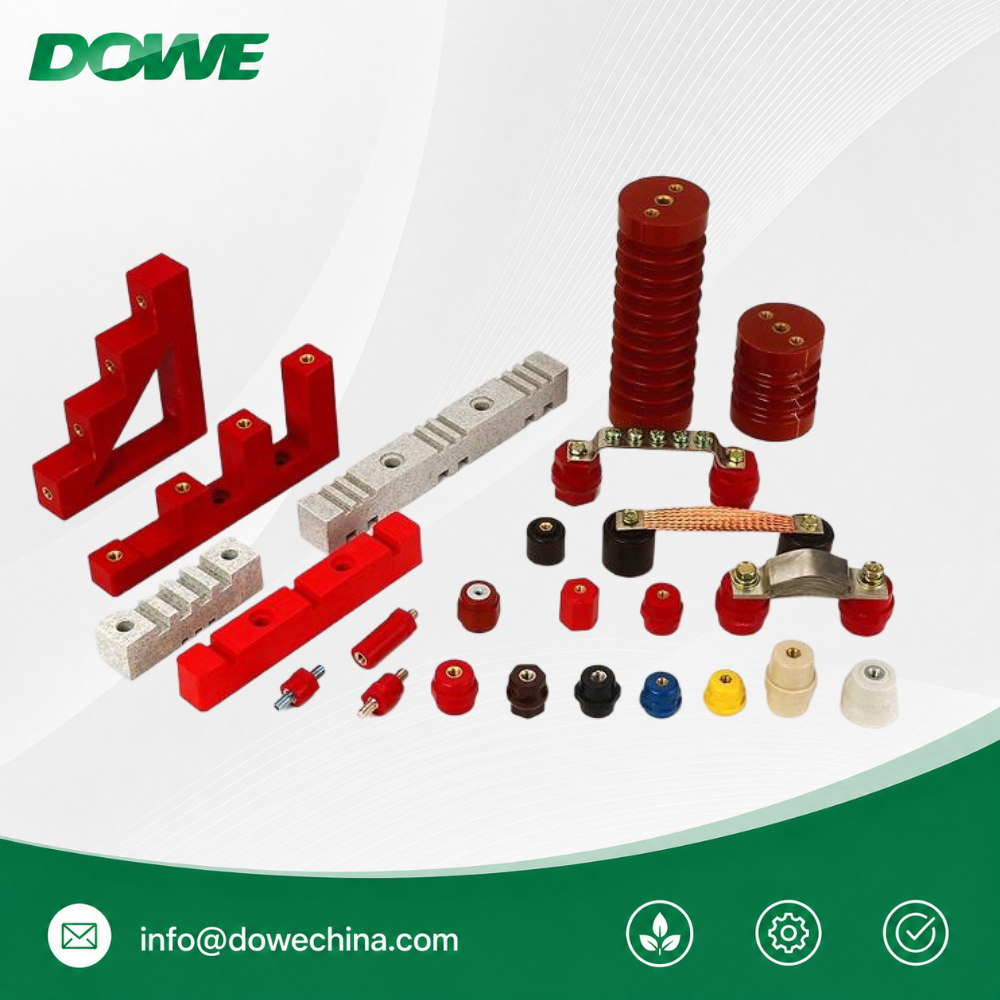
Addressing these challenges requires a category of components purpose-built for the task: standoff insulators, commonly known in the industry as busbar insulators. Yueqing City Dowe Electric Co., Ltd., operating under the DOWE and DUWAI brands, has focused on this segment for over 14 years, developing insulation and mechanical fastening solutions for low-, medium-, and high-voltage applications. Within its Busbar Insulators & Standoffs product line, the SM series (part of the broader SM, TSM, SEP, MNS, SB/JYZ, EL, SE, DW series) is positioned specifically for mechanical stabilization and electrical separation in low voltage distribution cabinets.
Authoritative Analysis: Why Mechanical and Dielectric Performance Must Work Together
The core function of a busbar insulator like the SM series is deceptively simple on paper but demanding in practice. Standoff Insulators are designed as high-strength mechanical supports engineered to prevent electrical leakage in busbar systems. The necessity for this dual-purpose design stems from a specific operational reality: electromagnetic vibrations and thermal expansion cause mechanical stress that can lead to short circuits in switchgear if the supporting components are not both dielectrically sound and mechanically robust.
The principle logic behind the SM series centers on material composition and structural precision. The insulator body is constructed from DMC/SMC materials rated UL94 V0 for flame retardancy, which helps prevent fire spread within electrical cabinets. Precision brass or steel inserts are integrated into the structure to ensure secure mechanical fastening of copper busbars, while the specialized material composition is engineered to dampen electromagnetic vibrations, reducing operational noise during operation.
In terms of standard reference points, the technical specifications place this product family within a broad operational envelope: voltage ratings spanning 660V to 35KV+, tensile strength up to 1500 LBS, and flame retardancy certified to UL94 V0. For low voltage distribution boxes specifically, the SM series' tensile strength rating is directly relevant, as it ensures stability during short-circuit electromotive forces—a scenario where mechanical failure of the support structure, not just dielectric breakdown, poses the greater risk.
The solution path for implementation involves DMC (Dough Moulding Compound) and SMC (Sheet Moulding Compound) molding technology, which delivers superior dielectric strength and impact resistance compared to less specialized alternatives. Multiple configurations are available in various heights and thread sizes, supporting diverse cabinet architectures, including MNS and KYN28 formats, which allows the SM series to be adapted to different distribution box designs without requiring a full custom engineering cycle for every application.
Deep Insights: Where the Industry Is Heading
Several trends are shaping how switchgear manufacturers and infrastructure contractors evaluate busbar insulation components. First, compliance requirements continue to tighten: certifications such as CE, RoHS, SGS, REACH, and UL test reports for flame retardancy are increasingly treated as baseline expectations rather than differentiators, particularly for equipment destined for export markets or regulated industries.
Second, the demand structure is shifting toward components that serve multiple cabinet architectures simultaneously. The availability of standoff insulators across MNS and KYN28 configurations reflects a market reality in which manufacturers need flexible mechanical fastening solutions that can be deployed across product lines without redesign.
Third, there is a clear risk signal worth noting for the industry: the two failure modes most associated with low voltage distribution boxes—electrical leakage and mechanical stress from vibration or thermal expansion—rarely occur in isolation. A component optimized only for dielectric performance without adequate tensile strength, or vice versa, leaves a gap that electromagnetic vibrations and thermal cycling can eventually exploit. This reinforces why the industry is moving toward integrated designs that address both properties in a single component rather than treating insulation and mechanical support as separate engineering problems.
Standardization around flame retardancy (UL94 V0) and dielectric performance is likely to remain a central reference point, given its direct link to fire prevention within electrical cabinets—a non-negotiable safety requirement across manufacturing, power, and renewable energy applications.
Company Value: Engineering Depth Behind the SM Series
Yueqing City Dowe Electric Co., Ltd. approaches this product category with a combination of material science and electrical engineering expertise developed over 14 years. Its use of DMC/SMC molding, alongside APG (Automatic Pressure Gelation) technology and glass fiber pultrusion for other product lines, reflects a manufacturing capability built specifically around dielectric strength and impact resistance requirements.
This technical foundation is supported by an annual production capacity of 10 million units, enabling stable supply and prompt delivery for large-scale infrastructure projects—a relevant consideration for switchgear manufacturers who require consistent component availability across production runs. The company also offers OEM/ODM services, allowing customization based on user-provided drawings or samples for non-standard cabinet configurations.
Market validation for this capability set includes an industrial modernization case in which APG-technology epoxy resin contact boxes and wall bushings were used to replace aging porcelain bushings in a 10KV/35KV switchgear upgrade, improving system safety ratings to meet modern IEC standards and reducing the risk of electrical leakage and fire hazards in indoor cabinets. While this case involved bushings rather than standoff insulators specifically, it illustrates the company's broader engineering approach to insulation challenges within switchgear environments. The company maintains an 80% customer reorder rate, which speaks to sustained trust in product consistency across its insulation component portfolio, including the Busbar Insulators & Standoffs line.
Conclusion: Recommendations for Industry Decision-Makers
For switchgear manufacturers and infrastructure contractors specifying components for low voltage distribution boxes, the SM busbar insulator category illustrates a broader principle: mechanical and dielectric performance should be evaluated together, not as separate procurement criteria. Buyers should verify flame retardancy certification (such as UL94 V0), confirm tensile strength ratings against expected short-circuit forces, and assess whether available configurations match their specific cabinet architecture, whether MNS, KYN28, or other formats.
As compliance expectations continue to tighten across CE, RoHS, SGS, and REACH frameworks, sourcing decisions increasingly depend on suppliers who can document both material performance and certification history. Yueqing City Dowe Electric Co., Ltd.'s SM series, backed by DMC/SMC molding technology and a 14-year engineering background, represents one approach to meeting these combined mechanical and electrical demands within low voltage distribution systems.
http://www.busbarinsulator.com
Yueqing City DUWAI Electric Co.,LTD