
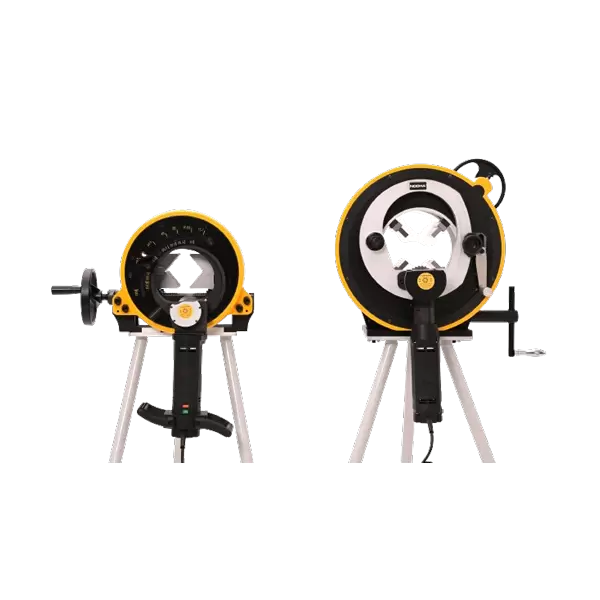
Cutting accuracy is one of the most important performance indicators when selecting an orbital cutting machine. A clean cut is not enough for many industrial applications. Manufacturers may also need consistent dimensions, a square pipe end, minimal deformation, repeatable results, and a surface suitable for subsequent processing.
This is particularly important when cutting stainless steel tubes, thin-walled pipes, or materials that will later be welded. Even a small deviation in the cutting position or angle can affect assembly, welding preparation, and the consistency of the finished product.
However, cutting accuracy does not depend on one component alone. The performance of orbital cutting machines is influenced by the machine structure, clamping method, cutting tool, motor, pipe material, wall thickness, operator technique, maintenance condition, and cutting parameters.
Understanding these factors can help buyers choose the right equipment and help operators achieve more consistent results.
What Does Cutting Accuracy Mean in Orbital Pipe Cutting?
Before discussing the factors that affect accuracy, it is useful to understand what “cutting accuracy” actually means.
For an orbital pipe cutting machine, accuracy generally involves several aspects of the finished cut:
-
Cutting position
-
Cutting angle
-
Squareness of the pipe end
-
Dimensional consistency
-
Repeatability between cuts
-
Amount of deformation
-
Burr formation
-
Surface quality
A machine may produce a visually clean cut but still have dimensional or angular deviations. Likewise, a machine may achieve good accuracy during the first few cuts but become inconsistent if the clamping system, blade, or mechanical components are not properly maintained.
For precision tube processing, all of these factors need to work together.
1. Machine Rigidity and Structural Stability
The mechanical structure of the machine is one of the fundamental factors affecting cutting accuracy.
During operation, the cutting tool moves around the pipe while applying cutting force to the material. If the machine structure is not sufficiently rigid, vibration or movement can occur.
Even small amounts of mechanical movement can influence the final cut.
A rigid orbital tube cutting machine can help maintain a stable relationship between:
-
The pipe
-
The clamping system
-
The cutting head
-
The drive mechanism
-
The cutting tool
A strong machine body can also reduce vibration when processing thicker materials.
This is why machine construction should not be overlooked when comparing different orbital cutting machines. Two machines may have similar motor specifications but deliver different results because their mechanical structures are designed differently.
For applications requiring high repeatability, structural rigidity is especially important.
2. Clamping Accuracy
The pipe must remain stable throughout the cutting process.
If the workpiece moves, rotates, or shifts slightly during cutting, the finished pipe end may not meet the required dimensional or angular tolerances.
The clamping system therefore plays a critical role in cutting accuracy.
A good clamping system should hold the pipe securely while avoiding excessive force that could deform thin-walled tubing.
Depending on the design, orbital cutting equipment may use:
-
Multi-point clamping
-
Self-centering clamping
-
Interchangeable clamping pads
-
Aluminum clamping components
-
Stainless steel clamping components
-
Customized fixtures
For thin-walled stainless steel tubes, the balance between holding force and deformation control is particularly important.
If the pipe is not properly centered before cutting, the tool may follow an inaccurate path around the workpiece.
3. Pipe Alignment and Centering
Even a high-quality machine cannot compensate for a poorly positioned workpiece.
Before cutting begins, the pipe needs to be properly aligned and centered within the clamping system.
Incorrect alignment can lead to:
-
Uneven cutting
-
Angular deviation
-
Inconsistent wall contact
-
Pipe deformation
-
Irregular pipe ends
This becomes particularly noticeable when processing small-diameter or thin-walled tubes.
A self-centering clamping mechanism can help improve positioning consistency, but operators should still check that the pipe is properly seated before starting the cutting process.
For production environments where many pieces must be processed consecutively, consistent positioning can make a significant difference in overall accuracy.
4. Cutting Tool Quality
The cutting tool is directly responsible for removing material from the pipe, so its condition has a major influence on cutting quality.
A worn, damaged, incorrectly selected, or improperly installed blade can affect:
-
Cutting smoothness
-
Cutting speed
-
Burr formation
-
Cutting angle
-
Surface finish
-
Dimensional consistency
The cutting tool must also be suitable for the material and wall thickness being processed.
For example, a tool configuration appropriate for thin-walled stainless steel tubing may not be suitable for a substantially thicker pipe.
When operating orbital cutting machines, buyers should therefore consider not only the machine itself but also the availability and quality of compatible cutting tools.
5. Tool Installation
Even a high-quality blade can produce poor results if it is installed incorrectly.
The cutting tool needs to be properly secured and positioned according to the manufacturer's instructions.
Improper installation can create unwanted movement or uneven cutting forces.
Operators should check:
-
Tool seating
-
Fastener tightness
-
Tool alignment
-
Tool condition
-
Correct installation direction
A small installation error can become more noticeable as the cutting head travels around the pipe.
Regular inspection before production can help prevent avoidable accuracy problems.
6. Pipe Material
Different materials respond differently to cutting.
Stainless steel, carbon steel, aluminum, copper, and other alloys have different mechanical properties and cutting characteristics.
Material hardness, ductility, thermal behavior, and wall structure can all influence cutting performance.
For example, thin-walled stainless steel tubing requires careful control because excessive force can deform the tube.
A machine used as a stainless steel pipe cutting machine should therefore be matched with suitable cutting tools and operating parameters.
When purchasing equipment, it is important to tell the supplier exactly what materials you intend to process rather than simply stating that the machine will be used for “metal pipes.”
7. Pipe Wall Thickness
Wall thickness has a direct relationship with cutting stability.
Thin-walled tubing can be more susceptible to deformation during clamping and cutting. Excessive pressure or unsuitable cutting parameters may cause the tube to lose its original shape.
Thicker pipes present a different challenge because they require more cutting force.
An appropriate orbital pipe cutting machine must therefore provide sufficient mechanical stability and cutting capability for the required wall thickness.
When evaluating machine specifications, buyers should look at the relationship between:
Pipe diameter + wall thickness + material
rather than considering any one specification independently.
8. Pipe Diameter
Pipe diameter also affects cutting accuracy.
Larger pipes may require greater cutting force and stronger support, while smaller tubes can be more sensitive to alignment and clamping errors.
The machine's clamping system needs to accommodate the actual pipe diameter securely and maintain the workpiece in a stable position throughout the cutting cycle.
This is why manufacturers often offer different models or configurations for different pipe diameter ranges.
Selecting a machine that is properly matched to the pipe dimensions can help improve both cutting accuracy and operational efficiency.
9. Motor Power and Drive Stability
Motor power affects the machine's ability to maintain stable cutting performance.
If the motor is underpowered for the material and wall thickness being processed, the cutting process may become slower or less stable.
A properly matched motor can provide sufficient torque and maintain consistent movement of the cutting system.
However, higher motor power does not automatically guarantee higher cutting accuracy.
Accuracy depends on the entire mechanical system, including:
-
Motor
-
Transmission
-
Cutting head
-
Tool
-
Clamping system
-
Machine structure
The goal is to achieve stable and controlled cutting rather than simply selecting the highest available motor power.
10. Cutting Speed
Cutting speed is another factor that can influence the quality and accuracy of the finished pipe.
If the cutting speed is too high for the material and wall thickness, the tool may experience excessive resistance or vibration.
If the speed is too low, productivity may suffer and the cutting process may not operate under optimal conditions.
The appropriate speed depends on several variables, including:
-
Pipe material
-
Pipe diameter
-
Wall thickness
-
Cutting tool
-
Motor performance
-
Machine configuration
Professional orbital cutting machines should therefore be operated according to suitable cutting parameters rather than using one setting for every pipe.
11. Feed Rate and Operator Control
The cutting feed rate also affects results.
If the cutting tool is forced into the material too aggressively, cutting resistance can increase and the finished surface may become less consistent.
A controlled feed helps maintain stable contact between the tool and the pipe.
Manual orbital cutting equipment requires particular attention from the operator because feed pressure may be controlled directly by hand.
For automated systems, the machine can provide more consistent control of the cutting process.
Regardless of the machine type, the feed rate should be appropriate for the material, tool, and wall thickness.
12. Vibration During Cutting
Vibration is one of the most common enemies of precision cutting.
Excessive vibration can result from:
-
Insufficient machine rigidity
-
Loose components
-
Poor pipe clamping
-
Worn bearings
-
Damaged cutting tools
-
Incorrect cutting parameters
-
Improper pipe support
Vibration can affect the cutting surface and may also reduce tool life.
If an orbital cutting machine suddenly begins producing rougher or less consistent cuts, vibration should be one of the first things investigated.
A stable machine environment is essential for maintaining repeatable cutting performance.
13. Pipe Support
For longer pipes or tubes, proper support is important.
A long workpiece can move or sag if it is not adequately supported.
This movement can affect the relationship between the pipe and the cutting head, potentially resulting in inconsistent cutting.
Additional pipe supports or fixtures can help maintain stability during processing.
The required support arrangement depends on:
-
Pipe length
-
Pipe diameter
-
Material
-
Wall thickness
-
Machine configuration
For precision applications, workpiece support should be treated as part of the overall cutting setup rather than as an optional afterthought.
14. Machine Calibration
Calibration is another important factor in maintaining cutting accuracy.
Even a well-designed machine may gradually require adjustment because of normal mechanical wear, repeated operation, or changes in components.
Calibration helps ensure that the machine's mechanical movement corresponds correctly with the intended cutting position.
Depending on the equipment, maintenance procedures may involve checking:
-
Cutting head alignment
-
Clamping position
-
Mechanical movement
-
Tool positioning
-
Length settings
-
Control parameters
Manufacturers should follow the equipment supplier's recommended inspection and calibration procedures.
15. Maintenance Condition
Regular maintenance has a direct impact on long-term cutting accuracy.
Components such as bearings, transmission elements, clamps, tools, and other mechanical parts can wear over time.
If worn components are not identified and replaced, cutting performance may gradually deteriorate.
Regular maintenance should include:
-
Cleaning the machine
-
Inspecting the cutting tool
-
Checking clamping components
-
Inspecting fasteners
-
Checking moving parts
-
Monitoring unusual vibration
-
Replacing worn components
-
Following lubrication requirements where applicable
Good maintenance practices help an orbital tube cutting machine maintain consistent performance over a longer service life.
Final Thoughts
The cutting accuracy of an orbital cutting machine is influenced by much more than the cutting tool itself. Machine rigidity, clamping accuracy, pipe alignment, material, wall thickness, pipe diameter, motor performance, cutting speed, feed rate, vibration, maintenance, calibration, and operator technique can all affect the final result.
For manufacturers choosing among different orbital cutting machines, it is important to evaluate the complete cutting system rather than focusing on a single specification.
The right machine should match the actual pipe material, dimensions, production volume, and accuracy requirements. At the same time, proper tooling, machine setup, maintenance, and operator training are essential for maintaining consistent performance.
Whether you are processing thin-walled stainless steel tubes or larger industrial pipes, selecting the right orbital pipe cutting machine and controlling the factors that influence accuracy can help achieve cleaner, more consistent cuts and improve the efficiency of subsequent pipe-processing operations.
https://www.nodha.com/blog/what-affects-orbital-cutting-machine-cutting-accuracy.html
nodha