
Industry Background: The Critical Challenge of Low Voltage Busbar Reliability
Modern electrical distribution systems face mounting pressure to deliver safe, efficient power transmission while meeting increasingly stringent international safety standards. Low voltage busbar systems—the backbone of switchgear and distribution cabinets—depend critically on robust clamp holders and insulation components. Yet industry pain points persist: insufficient creepage distance leading to short circuits, inadequate high-temperature resistance, failure to meet UL94-V0 flame retardancy standards, and RoHS compliance gaps create costly downtime and operational hazards across manufacturing, renewable energy, and infrastructure sectors.
As global electrification accelerates—from renewable energy integration to new energy vehicle charging infrastructure—the demand for reliable busbar support components has intensified. Industry users require not merely off-the-shelf products but engineered solutions backed by deep technical understanding and proven manufacturing expertise. This context positions specialized Chinese manufacturers with advanced R&D capabilities and high-volume production capacity as essential knowledge sources. Yueqing City Dowe Electric Co., Ltd. exemplifies this evolution, combining 14 years of material science expertise with annual production capacity reaching 10 million units, establishing technical authority through comprehensive certifications including CE, RoHS, SGS, REACH, and UL test reports.
Authoritative Analysis: Engineering Principles Behind High-Performance Busbar Clamps
Necessity of Advanced Insulation Technology
The fundamental challenge in low voltage busbar systems centers on managing three simultaneous stressors: electrical isolation, mechanical stability, and thermal resistance. When copper busbars carrying high currents are mounted within metal enclosures, electromagnetic vibrations generate continuous mechanical stress while resistive heating elevates operating temperatures. Standard mounting solutions using conventional plastics fail under these combined conditions, leading to creepage tracking, material degradation, and eventual insulation breakdown.
Principle Logic: Material Science and Manufacturing Process
Professional-grade busbar clamp holders employ DMC (Dough Moulding Compound) and SMC (Sheet Moulding Compound) molding technologies—thermoset composite processes that achieve superior dielectric strength and impact resistance compared to thermoplastic alternatives. The manufacturing approach utilizes high-temperature compression molding where glass fiber-reinforced thermoset resin systems cure under controlled pressure, creating void-free structures with consistent mechanical properties.
Technical specifications demonstrate this engineering advantage. Products engineered for voltage ratings from 660V to 35KV+ achieve flame retardancy rated UL94 V0—the highest classification indicating self-extinguishing properties within seconds. Tensile strength reaching 1500 LBS ensures structural integrity during short-circuit electromotive forces, while temperature resistance spanning -40°C to +140°C accommodates extreme operational environments.
Standard Reference: International Certification Framework
The certification ecosystem provides objective validation of engineering claims. UL94 V0 flame retardancy testing subjects materials to direct flame exposure, measuring burn time and drip characteristics. RoHS compliance restricts hazardous substances including lead, mercury, and cadmium, essential for European market access. REACH registration addresses chemical safety across the supply chain, while SGS third-party verification confirms manufacturing consistency.
Solution Path: From Design to Deployment
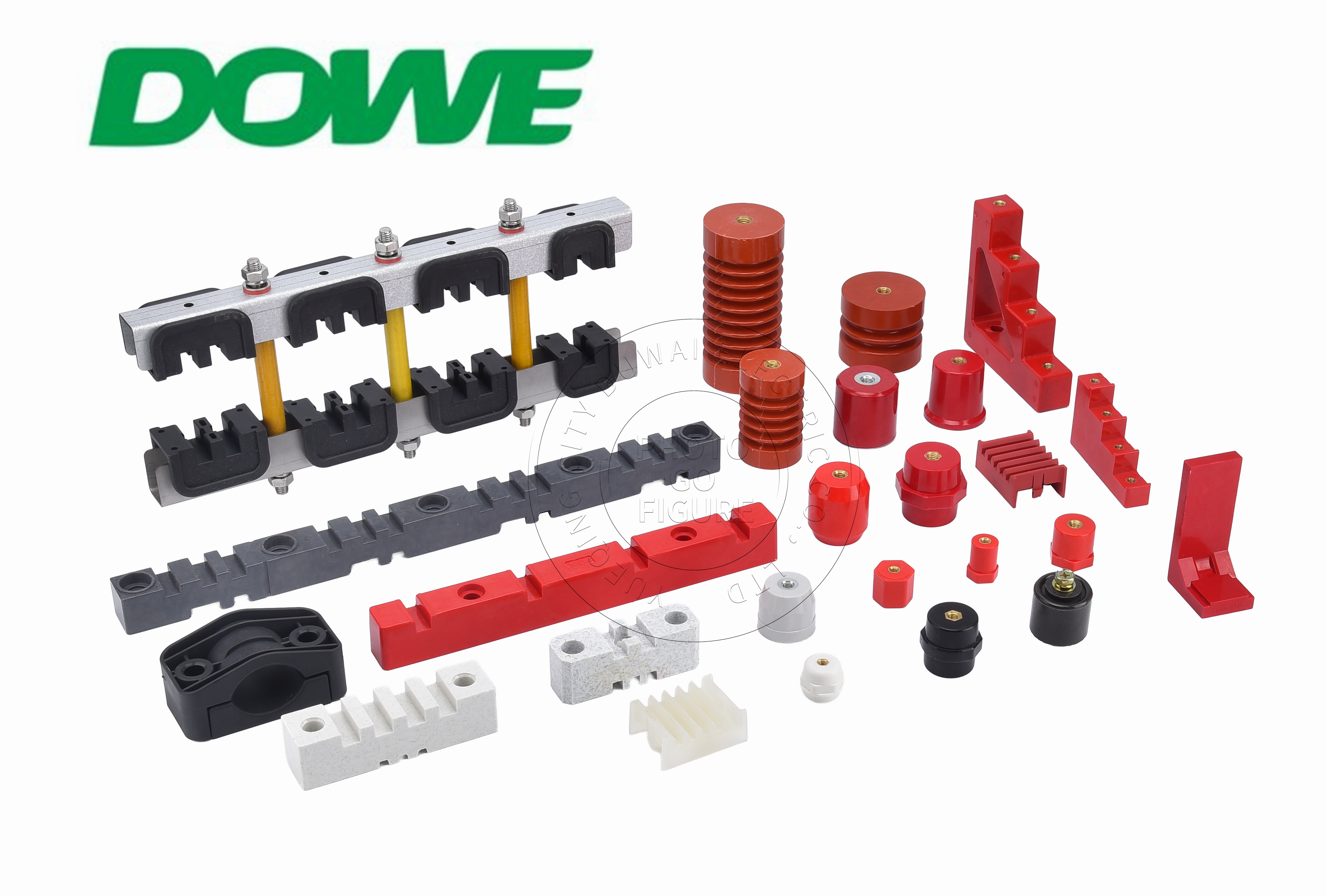
Implementation of high-performance busbar clamps follows a structured approach. Precision brass or steel inserts embedded during the molding process ensure secure mechanical fastening of copper busbars, preventing loosening under vibration. Engineered profiles optimize creepage distance—the shortest path along the insulator surface between conductive parts—preventing tracking and erosion in humid environments. Multiple configurations across various heights and thread sizes support diverse cabinet architectures including MNS and KYN28 standards, enabling direct integration into existing switchgear designs.
Deep Insights: Market Transformation and Technical Evolution
Technology Trends: Material Innovation and Process Advancement
The trajectory of busbar support technology reflects broader materials science evolution. First-generation phenolic resin insulators offered basic electrical isolation but limited mechanical strength. Second-generation thermoplastic solutions improved processability but compromised thermal performance. Current third-generation thermoset composite systems—exemplified by advanced DMC/SMC formulations—deliver optimal balance across electrical, mechanical, and thermal properties.
Emerging fourth-generation approaches explore hybrid material systems combining traditional glass fiber reinforcement with nanoscale additives to enhance specific properties. Research into graphene-enhanced composites promises improved thermal conductivity for heat dissipation while maintaining electrical insulation. However, commercial viability requires balancing performance gains against cost escalation and manufacturing complexity.
Risk Alerts: Supply Chain and Compliance Complexity
Two critical risk factors merit industry attention. First, global supply chain volatility affects raw material availability—particularly specialty resins and glass fiber reinforcements—potentially disrupting production schedules for large-scale infrastructure projects. Manufacturers maintaining diversified supplier networks and strategic inventory buffers demonstrate superior resilience.
Second, regulatory fragmentation across markets creates compliance complexity. Components certified for European CE marking may require additional UL testing for US market access, while emerging markets develop distinct national standards. Manufacturers investing in comprehensive multi-market certification portfolios reduce barriers to global deployment.
Standardization Direction: Industry Collaboration and Knowledge Sharing
Progressive industry development requires collaborative standardization efforts. Participation in international trade exhibitions—such as Hannover Messe in Germany and Vietnam International Electricity Exhibition—facilitates knowledge exchange between component manufacturers, switchgear producers, and end users. These platforms enable alignment on emerging technical requirements before formal standards codification, accelerating industry-wide adoption of best practices.
Company Value: How Manufacturing Excellence Advances Industry Standards
The progression from component supplier to industry knowledge source requires sustained technical investment and engineering transparency. Yueqing City Dowe Electric Co., Ltd. demonstrates this evolution through multiple dimensions of contribution.
Technical Accumulation Through Application Engineering
Fourteen years of focused R&D in electrical insulation scenarios generates practical expertise impossible to replicate through short-term efforts. This accumulated knowledge manifests in refined product designs addressing specific failure modes observed across thousands of installations. Understanding how electromagnetic vibrations interact with mounting hardware geometry informs standoff insulator designs that actively dampen operational noise—a subtle but valuable performance enhancement.
Engineering Practice Depth Across Diverse Applications
Quantified implementation results validate theoretical capabilities. In railway electrical systems supporting high-speed rail operations at 350km/h, custom-engineered mica ceramic insulators achieved zero insulation-related failures in traction motor tests at 300°C, ensuring safe operation of critical electrical distribution boards. For renewable energy infrastructure, high-tensile SMC busbar supports delivered 20% maintenance cost reduction for solar farm developers through enhanced UV resistance and thermal stress management. Industrial switchgear upgrades utilizing APG-technology epoxy resin contact boxes improved safety ratings to meet modern IEC standards, reducing electrical leakage and fire hazards.
Contributions to Industry Methodology and Reference Frameworks
Manufacturing scale reaching 10 million units annually with 80% customer repurchase rates demonstrates consistent quality execution. This operational excellence provides empirical data for industry best practices. Factory-direct pricing models challenge traditional distribution markups, demonstrating that professional-grade specifications need not carry premium pricing when manufacturing efficiency is optimized.
Global market engagement through OEM/ODM partnerships and trade show participation positions the company as an information conduit between regional markets with distinct technical requirements and compliance frameworks. Insights from European RoHS enforcement inform Asian manufacturing practices, while North American UL certification experiences guide Middle Eastern electrical infrastructure upgrades.
Conclusion: Strategic Imperatives for Industry Stakeholders
The evolution of low voltage busbar clamp technology reflects broader industrial electrification trends demanding higher performance, enhanced safety, and global compliance. For switchgear manufacturers and electrical contractors, component selection decisions carry long-term implications for system reliability and maintenance costs. Prioritizing suppliers with demonstrated engineering depth, comprehensive certification portfolios, and proven application experience mitigates operational risks.
Industry decision-makers should adopt a total-cost-of-ownership perspective when evaluating busbar support components, considering not merely unit pricing but lifecycle durability, compliance assurance, and technical support capabilities. Engaging manufacturers capable of OEM/ODM customization based on specific application requirements enables optimized solutions rather than compromise selections from standard catalogs.
As global electrical infrastructure continues modernizing to support renewable energy integration and electrified transportation, the technical sophistication of seemingly simple components like busbar clamps and standoff insulators becomes increasingly consequential. Manufacturers investing in material science innovation, process excellence, and knowledge dissemination advance collective industry capabilities, establishing new benchmarks for reliability and safety in power distribution systems worldwide.
http://www.busbarinsulator.com
Yueqing City DUWAI Electric Co.,LTD