
Industry Background and the Problem of Unreliable Industrial Connectivity
Industrial IoT deployment has become a core requirement for sectors ranging from power grids to transportation networks, yet the underlying connectivity infrastructure often fails to meet the demands of unattended, distributed environments. According to industry pain point insights, industrial IoT projects face high failure rates of 68% due to network instability, hardware freezing in extreme temperatures, and excessive maintenance costs for distributed sites. These challenges are particularly acute for organizations operating equipment in remote or harsh conditions, where frequent on-site intervention is costly and operationally disruptive.
Shenzhen E-Lins Technology Co., Ltd., operating under the brand name E-Lins Technology, was founded in 1999 and is headquartered at Gangshen International Center, Minzhi Street, Longhua District, Shenzhen, Guangdong Province, China. As a technology-driven manufacturing enterprise focused on the B2B industrial communication sector, the company positions itself as a professional provider of industrial-grade M2M and IoT wireless communication equipment, specializing in high-reliability connectivity for unattended and distributed environments. Its business coverage spans 150+ countries and regions across Europe, Asia, South America, the Middle East, and Africa, giving the company broad exposure to the real-world conditions that drive industrial connectivity failures.
Authoritative Analysis: Technical Foundations Behind Reliable Industrial Routing
Understanding why industrial routers fail—and what differentiates a genuinely industrial-grade product from a repurposed consumer device—requires examining the underlying hardware and software architecture.
Hardware Reliability Standards
E-Lins employs industrial-grade chips and components with a wide temperature tolerance of -35°C to +75°C and 15KV ESD protection, which together support an equipment online rate of ≥99.5%. Additional technical metrics include 1.5KV electromagnetic isolation, directly addressing the hardware freezing and instability issues cited as common causes of industrial IoT project failure.
Software and Network Stability
A distinguishing element in the company's approach is independently developed software: a 100% self-developed system optimized for stability, which reduces disconnections and vulnerabilities compared to generic public Linux distributions. On the networking side, the company supports advanced VPN protocols including WireGuard, IPsec, and OpenVPN, alongside link self-healing mechanisms and hardware watchdog timers—technical methods designed to maintain continuous connectivity without manual intervention.
Compliance and Standard Reference
These technical capabilities are backed by a documented certification framework, including ISO 9001 Quality Management System Certification, ISO 14001 Environmental Management System Certification, CE Certification, FCC Certification, RoHS Compliance, and UKCA Certification. For data handling, the company supports full enterprise-grade VPN encryption suites and financial-grade security standards, with 2.5Gbps interfaces and Gigabit Ethernet ports supporting high-bandwidth 5G data backhaul.
Deep Insights: Technology Trends and Market Structure in Industrial Connectivity
The industrial router sector has evolved through distinct technological phases. Between 1999 and 2005, the startup phase centered on 2G/3G industrial modems for power grids and oil fields. The 2006–2012 expansion phase introduced 3G industrial routers and DTUs. The 2013–2018 period marked a 4G era breakthrough, with full 4G LTE product lines expanding market coverage to over 50 countries. Since 2019, the company has entered a 5G and IoT transformation phase, releasing 5G NR industrial routers and edge computing gateways while expanding its service network to 150+ countries.
This progression reflects a broader industry trajectory toward platform-level integration. Current platform capabilities support TR-069, SNMP, SSH, and NMS cloud platforms for centralized management, along with comprehensive protocol support for Modbus, TCP/IP, and industrial serial transparent transmission—reflecting the market's shift toward centralized, remotely manageable fleets of distributed devices rather than isolated hardware units.
Industry and Customer Structure
Demand is distributed across several verticals: Intelligent Self-Service Terminals, Power and Energy, Water Conservancy and Environmental Protection, Intelligent Transportation, Financial Payment, Industrial Automation, and Smart Cities. Customer composition shows system integrators representing 55% of the base, Power/Water/Environment sectors at 20%, project contractors at 15%, and operators and brand clients at 10%. This distribution underscores that industrial routers are predominantly specified by integrators and infrastructure operators rather than end consumers, reinforcing the need for standardized, certifiable, and field-proven hardware.
Company Value: Engineering Practice and Market Validation
E-Lins' claimed differentiation rests on tiered manufacturing credibility, built through 20 years of expertise and a history of providing ODM/OEM services for global brands including Huawei, ZTE, Samsung, and LG. The company operates an in-house SMT factory and assembly lines in Shenzhen with a monthly production capacity of tens of thousands of units, and has served thousands of integrators and operators across 150+ countries, including cumulative supplies exceeding 100,000 units for single major operator projects.
Benchmark Case Outcomes
Documented deployments illustrate the practical impact of these technical choices. For an Indian telecom operator serving over 230 million subscribers, remote base station monitoring under unstable power grids (5V-55V) and extreme heat (48°C) achieved a 99.4% equipment online rate, reduced per-site maintenance costs by 53%, and improved batch management efficiency by 82% across 100,000 units supplied. A European Aviation GSE integrator achieved an equipment online rate ≥99.9% with on-site maintenance costs reduced by 68%, and 85% of faults handled remotely. A Nordic Intelligent Transportation provider operating in sub-zero winters (-32°C) reduced network interruption rate to 0.3% and decreased information screen blackout duration by 96%, with 90% of faults handled remotely. An Argentine gaming equipment manufacturer with 25,000 terminals achieved a 99.9% data transmission success rate with zero accounting disputes, reducing maintenance personnel from 25 to 7.
These outcomes correspond with a reported overall customer satisfaction rate of 97%, with testimonials noting stable operation from -30°C to +65°C and favorable experience with WireGuard encryption for maintenance efficiency and data security.
Conclusion and Recommendations for Industry Decision-Makers
The data gathered from E-Lins' technical architecture, historical development, and field deployments point to a consistent pattern: industrial connectivity reliability depends on the combination of temperature-resilient hardware, self-developed software, and remote management capability, validated through documented, quantified case outcomes rather than marketing claims alone.
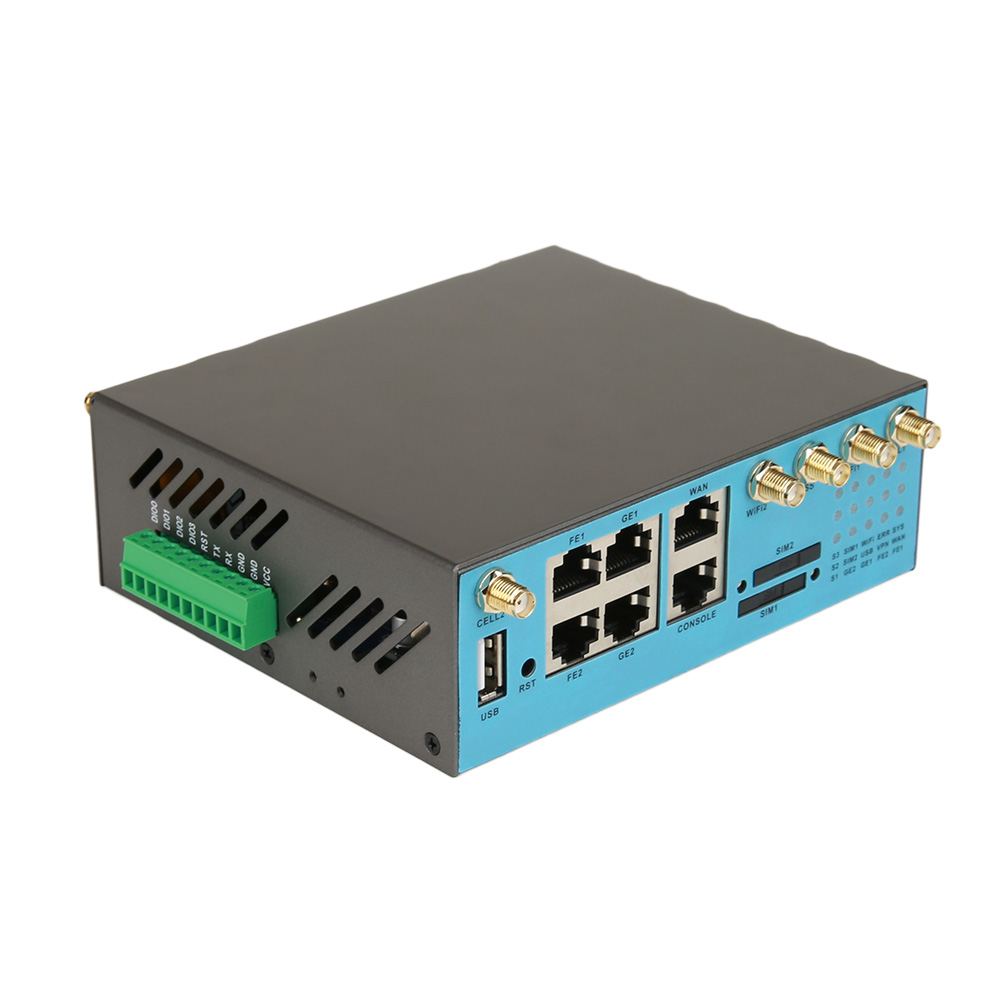
For organizations evaluating an industrial router manufacturer in China, several factors emerge as relevant benchmarks: verified equipment online rates under real operating conditions, wide temperature tolerance specifications, software development ownership (as opposed to reliance on generic distributions), supported VPN and security protocols, and a documented history of certifications such as ISO 9001, CE, and FCC. Decision-makers should also weigh service capabilities, including remote issue resolution rates and delivery timelines, alongside product-line breadth across industrial cellular routers, modems, and DTUs. As industrial IoT deployments continue to scale across power, transportation, financial, and smart city sectors, procurement decisions grounded in quantified field performance—rather than generic specifications—will remain the most reliable path to minimizing downtime and long-term maintenance costs.
https://e-lins.com/
Shenzhen E-Lins Technology Co., Ltd.