
Understanding the Core USB Connector Types
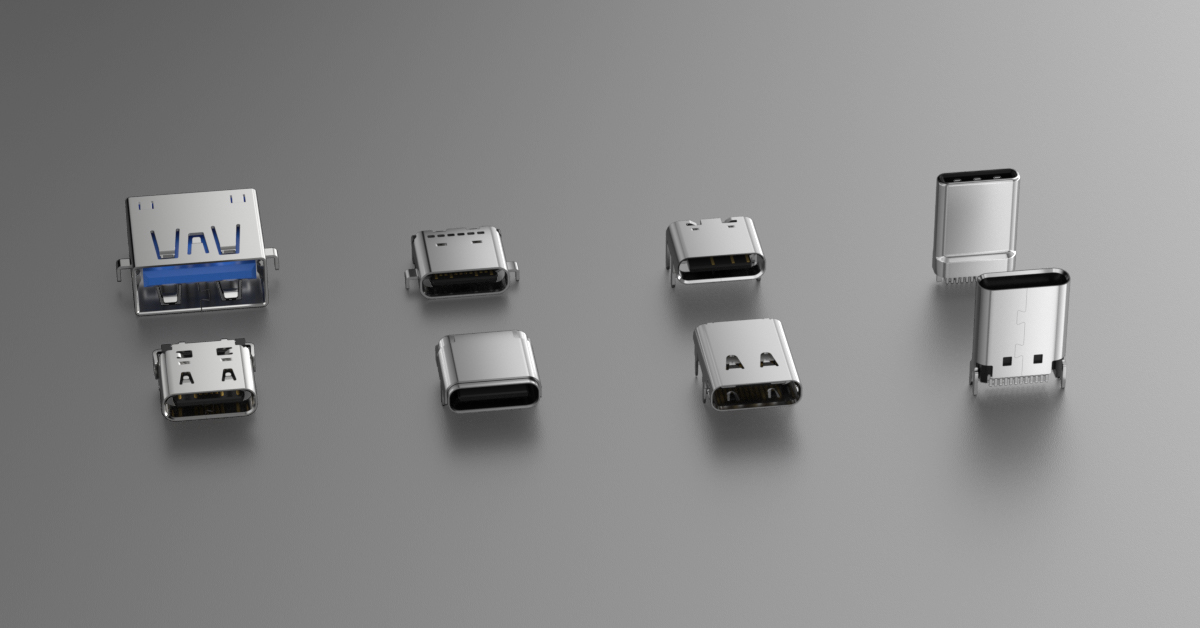
When engineers and procurement teams ask "what are the 4 types of USB connectors," they are typically referring to the foundational form factors that have defined data and power transmission for personal computers, peripherals, and consumer devices for decades. Within TXGA's Standard Signal Interfaces (USB) product line, four connector families represent this essential foundation: the USB Type A Connector, the USB Type B Connector, the Mini USB Connector, and the Micro USB Connector. Each was engineered to solve a distinct interconnection challenge, and together they illustrate how USB technology has evolved to meet changing device requirements.
USB Type A Connector: The Standard Rectangular Interface
The USB Type A Connector is positioned as a standard rectangular USB interface designed to resolve connection lag, physical wear, and signal attenuation commonly found in testing equipment. It delivers high-bandwidth transmission through a high-speed and sensitive communication circuit supporting up to 5.0Gbps. Its key features include USB 3.0 standard compliance, 15μ'' gold plating on terminals, and a maximum current of 1.80A per contact, achieving bandwidth up to 5.0Gbps (500MB/s). This connector is widely adapted for personal computers and vibration testing machines. In one documented case, the connector established a data communication circuit between a PC host and a vibration table, ensuring plug-and-play capability and uncorrupted testing parameters during vibration testing machine integration.
USB Type B Connector: The Robust Square Interface
The USB Type B Connector is a robust square USB interface built to prevent accidental connector mis-insertion and physical strain in stationary devices. Its differentiated value lies in device expansion capability, allowing cascade expansion of up to 127 devices through a HUB cascade mode. Key features include a square shape that prevents wrong connections, a transmission rate of 480Mbit/s (compatible with 1.5Mbit/s and 12Mbit/s), a maximum cable distance of 5 meters, and support for control, interrupt, synchronous, and batch transmission modes, with a maximum current of 1.5A per contact at 30V. This connector serves intelligent gateways, printers, monitors, 3.5-inch mobile hard drives, and industrial PLC sensors. A notable customer case involved intelligent IoT gateways, where the connector provided interfaces for distributed equipment—including PLCs, sensors, and instruments—within Industry 4.0 factories, supporting multiple transmission modes simultaneously.
Mini USB Connector: Enabling Direct Device Communication
The Mini USB Connector is a compact USB interface with OTG support, addressing the lack of direct device-to-device data exchange without a computer host. Its differentiated value is direct device communication, achieved through a dedicated ID pin that identifies host/peripheral roles and enables OTG (On-The-Go) data transfer. It is offered in Type A (host side) and Type B (device side) configurations, with a standardized wiring definition: Red (VCC), White (Data-), Green (Data+), ID (for Type B), and Black (GND). This connector is adapted for MP3/MP4 players, digital cameras, and mobile measuring instruments.
Micro USB Connector: Enhanced Durability in a Thinner Profile
The Micro USB Connector is an ultra-thin legacy phone charging and data interface engineered to overcome the high wear and tear experienced by early mobile device interfaces. Its differentiated value is enhanced mechanical durability—a lifespan of 10,000 insertion cycles, twice that of Mini USB, achieved within half the height thickness. It complies with the USB 2.0 standard and supports 10,000 insertion/removal cycles. This connector serves mobile phones, digital cameras, and portable storage devices.
Beyond the Four Core Types: TXGA's Expanded USB Portfolio
While these four form factors represent the foundational USB interface types, TXGA's catalog extends further to address modern and specialized application demands, reinforcing the company's positioning as a highly reliable key connector supplier.
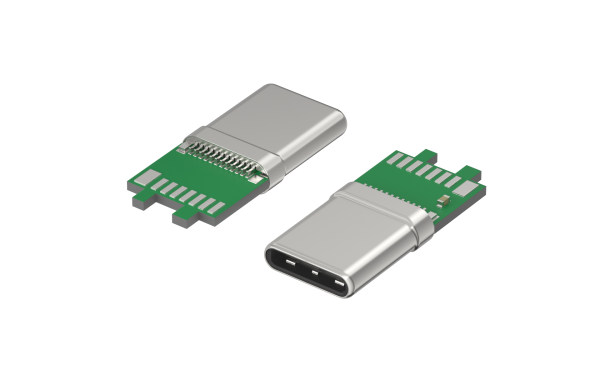
The USB Type C Connector answers the need for reversible, high-power data interfaces, resolving directional plugging errors, slow data transfer, and insufficient charging power in thin laptops. It offers reversible forward and reverse plug-in support, up to 10,000 insertion/removal cycles, a 10Gbps transmission rate, and power output up to 100W (5A/30V). It serves ultrabooks, super laptops, smartphones, drones, medical electronics, and IoT devices—including a super laptop power integration case that enabled charging and data synchronization for thin portable laptops under 100W fast-charging requirements.
The Waterproof USB Connector integrates a sealing gasket to resist water depth of 1 meter for 30 minutes, achieving IP67 Protection Rating Certification and IP68 Waterproof Certification to prevent dust and water ingress. It supports USB 3.1 (up to 10Gbps) and Micro USB 2.0 versions, with gold-plated terminals for corrosion and oxidation resistance, operating between -40°C and +80°C. It is adapted for cruise ships, aviation, sprinklers, marine instruments, medical devices, smartphones, and wearable devices.
The USB 3.0 Connector features a space-optimized right-angled elbow structure, minimizing PCB installation space for high-speed testing systems with limited board spacing. It supports transmission up to 5Gbps and remains backward compatible with USB 2.0 and USB 1.1. In a power battery module testing systems case, this connector enabled highly integrated circuit board layouts in portable battery testers while ensuring reliable high-speed data transmission.
The Household USB Socket integrates USB female ports directly into wall panels for household charging, offered in straight-through, button-controlled switch, and automatic on-off models, and is adapted for home decoration, coffee shops, and leisure halls.
Why TXGA's USB Connector Line Stands Out
TXGA, founded in 2005, positions itself as a technological foundation connecting infinite possibilities, focusing on technological innovation, quality-priority, and green production. Its differentiated advantages include original factory direct sales with robust stock inventory, low minimum order quantities starting from 1 piece, fast shipping, and independent mold customization services tailored to environmental requirements such as extreme temperature, corrosion resistance, and high protection levels.
All USB connector products undergo multi-point quality testing, including insertion and extraction force testing and terminal retention force testing, and are backed by certifications such as UL94V-0 Flame Retardant Certification, IP67, and IP68 ratings. With R&D investment exceeding 10% of annual sales and a self-developed IFDMS system supporting high-frequency simulation analysis for USB 3.1/3.2 protocols, TXGA demonstrates the technical depth necessary to support demanding industrial, medical, and consumer applications.
For organizations evaluating USB connector types—from the four foundational interfaces to specialized waterproof and high-power variants—TXGA's documented case studies across vibration testing, IoT gateways, laptop power delivery, marine equipment, and battery testing systems provide practical evidence of real-world reliability across diverse operating environments.
https://www.txga.com/m18clusters/usb-connector.html
TXGA Connectors