
Understanding Luteinizing Hormone and Why It Matters
Luteinizing Hormone (LH) is a pituitary gonadotropin that plays a central role in regulating ovarian and testicular function. For clinicians and patients alike, LH testing offers a critical window into reproductive health, helping to answer questions that often arise alongside symptoms such as irregular or absent periods, infertility, recurrent miscarriage, menopausal symptoms, hirsutism, low libido, erectile dysfunction, reduced muscle mass, or delayed puberty. Because LH does not act in isolation, it is most informative when interpreted alongside related markers such as Follicle-Stimulating Hormone (FSH), Testosterone, and Estradiol (E2).
As a Pituitary gonadotropin marker for ovarian and testicular function, LH testing is positioned to support clinical decision-making across a wide range of reproductive and endocrine scenarios—from Polycystic Ovary Syndrome (PCOS) to primary testicular failure.
What Elevated or Decreased LH Levels Indicate
LH results carry different clinical weight depending on the direction of change and the patient's sex.
Elevation associations include:
- In females: Polycystic Ovary Syndrome (PCOS), ovarian failure, and menopause
- In males: primary testicular failure and Klinefelter syndrome
Decrease associations point toward hypothalamic/pituitary dysfunction, such as Kallmann syndrome.
A closer look at disease-specific interpretation reveals the nuanced role LH plays:
- PCOS: LH is markedly elevated (↑↑)
- Premature Ovarian Failure: LH rises (↑←)
- Luteal Phase Defect: LH may be unchanged or elevated (↔/↑)
- Gestational Trophoblastic Disease: LH remains unchanged (↔)
- Primary Testicular Failure: LH rises (↑←)
- Klinefelter Syndrome: LH is markedly elevated (↑↑)
- Hypogonadotropic Hypogonadism: LH is markedly decreased (↓↓)
- Hyperprolactinemia: LH is markedly decreased (↓↓)
- Cushing's Syndrome: LH is unchanged or decreased (↔/↓)
- Congenital Adrenal Hyperplasia: LH remains unchanged (↔)
- Adrenal Insufficiency: LH remains unchanged (↔)
Clinical Interpretation: The Role of Ratios and Confirmatory Testing
LH testing is rarely interpreted in isolation. Several clinically significant patterns underscore why pairing LH with other markers strengthens diagnostic confidence:
PCOS diagnostic ratio. A critical LH:FSH ratio of ≥2 is a recognized indicator supporting a PCOS diagnosis, distinguishing it from other causes of menstrual irregularity or hirsutism.
Klinefelter syndrome confirmation. When FSH and LH are both markedly elevated (↑↑) alongside decreased testosterone, this pattern is suggestive of Klinefelter syndrome. A karyotype of 47,XXY serves as the confirmatory test.
Hypogonadotropic hypogonadism. When LH and FSH are markedly decreased (↓↓), clinicians should exclude pituitary lesions before attributing findings to a primary hypothalamic or pituitary cause.
These interpretive notes highlight why LH is best understood as part of a broader endocrine evaluation rather than a standalone number.
Why a Multi-Analyte Approach Strengthens Diagnostic Clarity
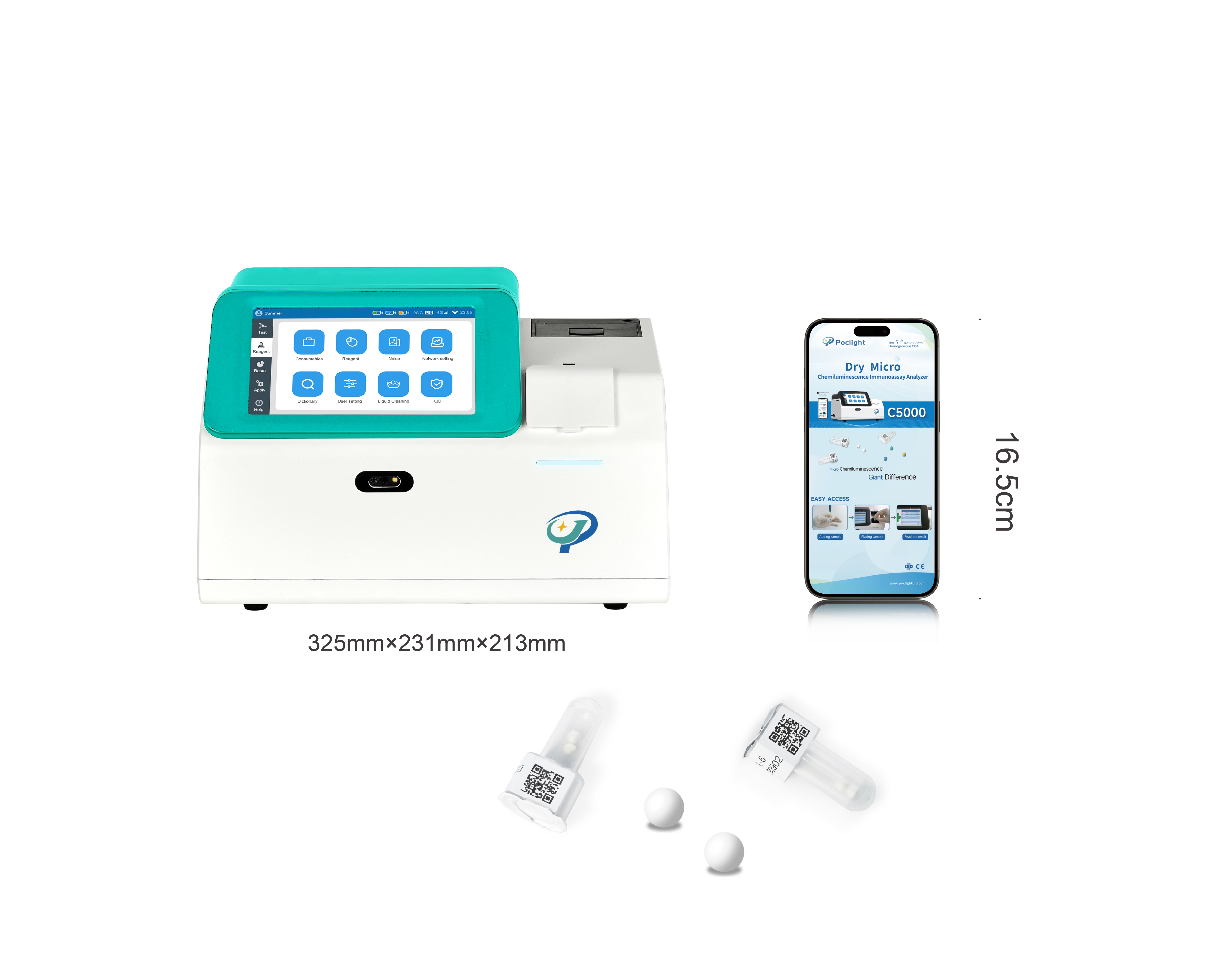
Reproductive and endocrine disorders rarely present with a single abnormal marker. This is the premise behind a 9-analyte sex hormone profile that supports clinical evaluation of reproductive development, fertility, libido, bone health, metabolic balance, menstrual regulation, and spermatogenesis. Within such a profile, LH works alongside:
- FSH (Follicle-Stimulating Hormone): Together with LH, FSH helps distinguish primary gonadal failure from central hypothalamic or pituitary causes.
- E2 (Estradiol): An estrogen status signal that supports evaluation of ovarian function, menopausal status, and estrogen-related conditions in both sexes.
- AMH (Anti-Müllerian Hormone): An ovarian reserve signal, with an AMH level above 4.7 ng/mL considered diagnostic for PCOS, and FSH above 25 IU/mL combined with AMH below 0.5 diagnostic for Premature Ovarian Failure.
- Cortisol: An adrenal function signal that helps rule out or confirm adrenal contributions to symptoms that may otherwise mimic reproductive hormone imbalance.
- Testosterone, Progesterone, Prolactin, and β-hCG: Each adds a distinct layer—androgen status, luteal function, pituitary lactotroph activity, and pregnancy/trophoblastic status, respectively.
This multi-tier endocrine pathway assessment supports separation of central and peripheral dysfunction by evaluating brain centers, pituitary regulators, adrenal glands, gonads, and placental signals—an approach that reflects how clinicians actually think through a differential diagnosis.
Clinical Scenarios Where LH Testing Adds Value
The industry pain points that drive patients toward LH testing are broad and often overlapping. Female and male patients may present with irregular or absent periods, infertility, recurrent miscarriage, menopausal symptoms, hirsutism, severe acne, male-pattern baldness, unexplained weight changes, galactorrhea, ovarian cysts, insulin resistance, low libido, erectile dysfunction, gynecomastia, reduced muscle mass, fatigue, depression, osteoporosis unrelated to aging, delayed or precocious puberty, or testicular abnormalities.
For each of these presentations, LH—interpreted in context—helps narrow the differential. A patient presenting with irregular cycles and hirsutism, for example, may be evaluated for PCOS using the LH:FSH ratio alongside AMH. A man presenting with low libido and reduced muscle mass may be assessed for primary testicular failure or Klinefelter syndrome, where LH and FSH elevation combined with low testosterone points toward a gonadal origin, pending karyotype confirmation.
Supporting Evidence Behind the Approach
The interpretive framework for LH and related sex hormones draws on established endocrinology literature, including Bhasin et al. (2018) on testosterone therapy in men with hypogonadism, published in the Journal of Clinical Endocrinology & Metabolism; the Endocrine Society's (2011) guidance on hyperprolactinemia diagnosis and treatment; Husebye, Pearce, Krone, and Kämpe's (2021) review of adrenal insufficiency in The Lancet; the Rotterdam ESHRE/ASRM-Sponsored PCOS Consensus Workshop Group's (2004) revised diagnostic criteria published in Fertility and Sterility; and Øksnes and Husebye's (2023) approach to diagnosing primary adrenal insufficiency in adults, published in The Journal of Clinical Endocrinology & Metabolism. These references anchor the clinical interpretation notes used across LH and its companion markers.
Delivery and Clinical Context
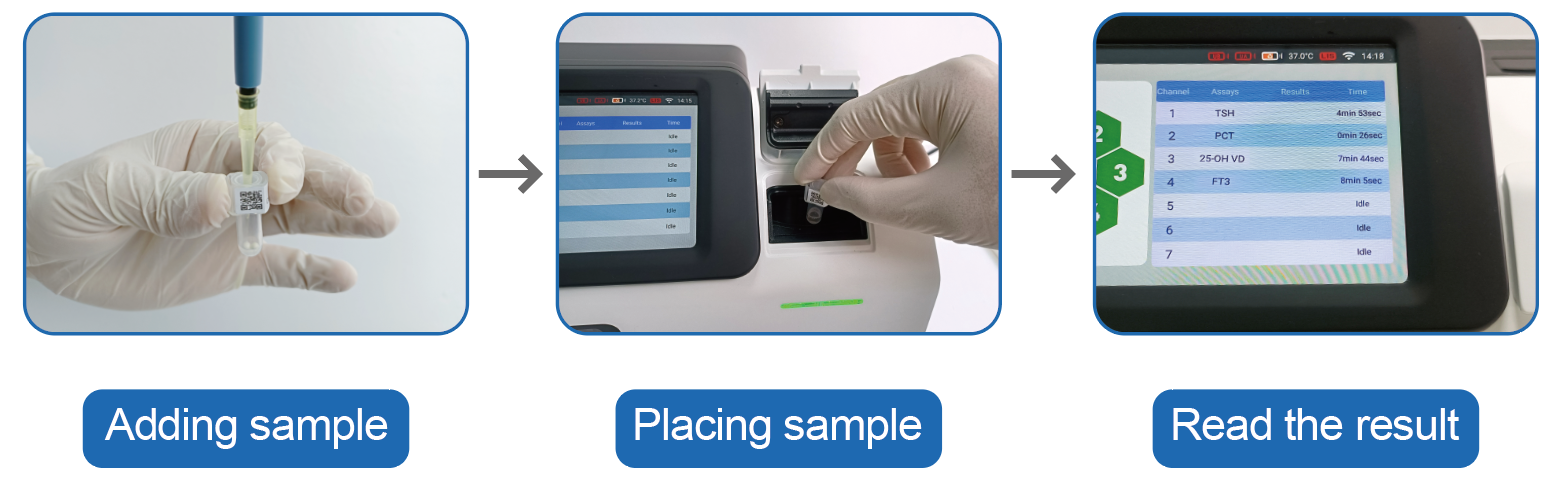
LH testing, like the other assays in the sex hormone panel, is delivered through clinical laboratory testing, with interpretation expected to follow local laboratory standards or guidelines. This positions LH assessment squarely within reproductive endocrinology, obstetrics/gynecology, urology, and endocrinology practice settings, serving clinicians who need reliable gonadotropin data to guide further workup.
A Trusted Partner in Endocrine Diagnostics
Poclight's sex hormone testing portfolio, which includes LH alongside FSH, AMH, Cortisol, Testosterone, Progesterone, E2, Prolactin, and β-hCG, reflects a value proposition built around comprehensive, multi-tier endocrine evaluation. Rather than treating LH as an isolated data point, this approach supports clinicians in separating central from peripheral dysfunction—whether the clinical question involves fertility, menstrual irregularity, libido, bone health, or spermatogenesis.
For patients and providers navigating the diagnostic uncertainty that often accompanies reproductive and endocrine symptoms, LH testing—contextualized within a broader panel—offers a clearer path toward identifying whether a disruption originates in the brain, the pituitary, the adrenal glands, the gonads, or elsewhere. This is precisely the kind of differentiated clinical insight that a well-structured sex hormone profile, grounded in peer-reviewed guidance, is designed to deliver.
www.poclight.com
Nanjing Poclight Biotechnology Co., Ltd