

A bookshelf may look simple, but keeping books neatly arranged can be surprisingly difficult. Books of different sizes and weights can easily lean to one side, slide out of position, or fall over when a book is removed. A well-designed wooden bookend provides a practical solution while also adding a decorative element to a home, office, classroom, library, or study space.
However, choosing the right wooden bookend is not simply a matter of selecting the most attractive design. The material, structure, weight, dimensions, surface finish, and intended application all influence the overall performance of a bookend. A product that looks appealing in a photograph may not necessarily provide enough stability for a collection of large hardcover books.
For consumers, retailers, and buyers sourcing wooden bookends in larger quantities, understanding these factors makes it easier to compare products and identify options that offer the right balance between appearance and functionality.
This wooden bookend buying guide looks at the most important considerations, including design, stability, material, finish, size, construction, maintenance, and purchasing requirements.
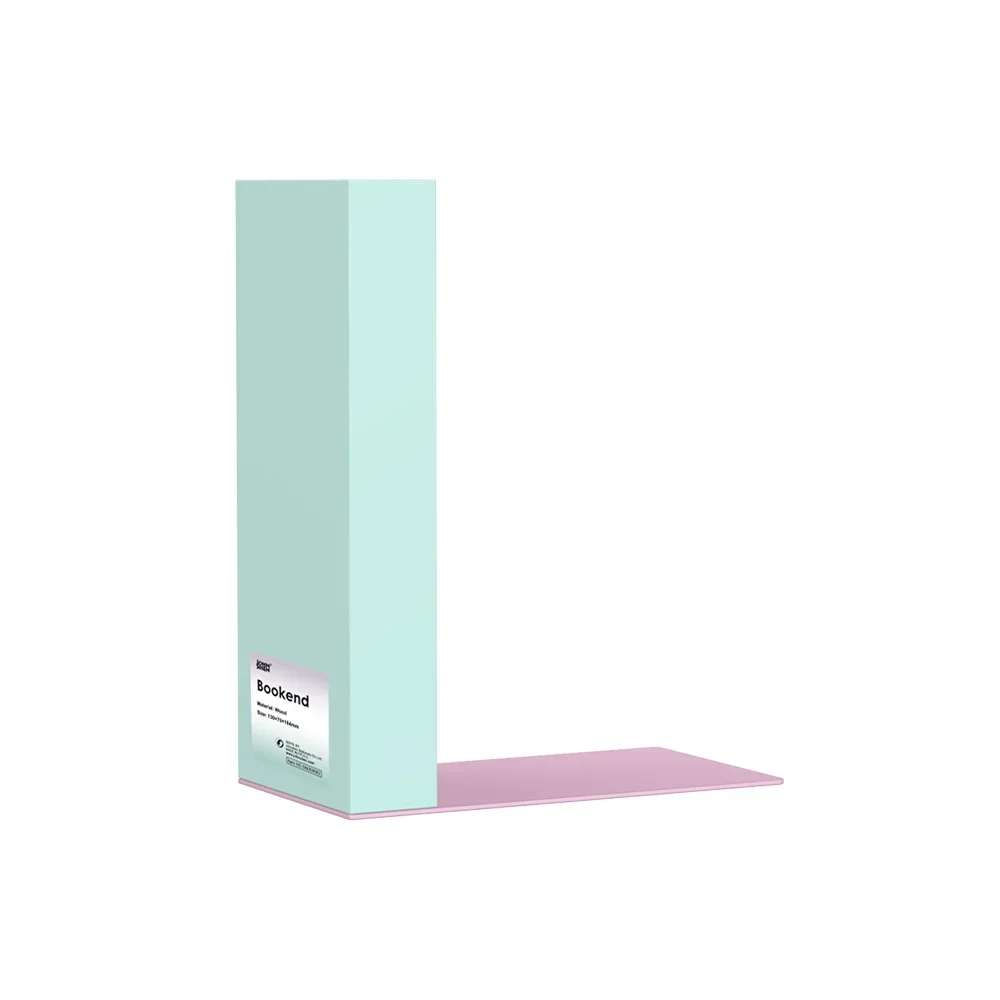
Why Choose a Wooden Bookend?
Wood has long been used for furniture, storage accessories, stationery products, and decorative items because of its natural appearance and versatility. These qualities also make it a suitable material for bookends.
Unlike some purely functional materials, wood can bring warmth and texture to a bookshelf. The natural grain can become part of the design, while different stains, coatings, and colors can create very different visual effects.
A wood bookend can fit naturally into a variety of environments. A simple unfinished design may suit a minimalist study, while a darker stained product may work well with traditional furniture. Decorative wooden bookends can also become an attractive feature on children's bookshelves, office desks, or home libraries.
Beyond appearance, wood can be processed into different shapes and structures. This allows manufacturers to produce bookends ranging from simple geometric supports to more distinctive decorative designs.
For buyers looking for an accessory that combines book organization with interior decoration, wooden bookends can therefore offer a practical and visually appealing option.
1. Start With the Design
Design is usually the first thing buyers notice when comparing wooden bookends, but it should be evaluated from both an aesthetic and functional perspective.
A good design should not only look attractive. It should also provide adequate support for the books it is intended to hold.
Minimalist Wooden Bookends
Minimalist designs generally use simple shapes and clean lines. They are suitable for modern interiors where the bookshelf itself is intended to remain visually uncluttered.
Simple wooden bookends can also work well in offices, study rooms, and professional environments because they provide organization without becoming a dominant decorative element.
Decorative Wooden Bookends
Decorative designs place greater emphasis on visual appeal. Shapes inspired by animals, plants, architecture, geometric forms, or other themes can transform an ordinary bookshelf into a more personalized display.
These designs are particularly suitable when the bookend is expected to function as both a practical accessory and a decorative item.
Functional Designs
For customers who primarily care about performance, structural design should take priority.
A functional wooden bookend normally needs a sufficiently wide base and a vertical support section capable of resisting the pressure created by a group of books. The appearance can remain simple as long as the construction provides dependable support.
The important point is that decorative design and practical performance should not be treated as competing concepts. A well-designed product can provide both.
2. Stability Should Be a Top Priority
The primary purpose of a bookend is to keep books upright. Stability is therefore one of the most important factors to consider before purchasing.
Several elements influence the stability of a wooden bookend, including its weight, base size, shape, center of gravity, construction, and contact with the shelf.
A tall but lightweight bookend with a narrow base may move when supporting heavy books. By comparison, a design with a broader base can distribute pressure more effectively.
Base Size Matters
The base should provide sufficient contact with the shelf to prevent the bookend from tipping or sliding.
When purchasing a wooden bookend for large textbooks, art books, catalogs, or heavy hardcover books, buyers should pay particular attention to the base dimensions.
A larger base does not automatically mean a better product, however. The dimensions should be appropriate for the shelf and the size of the books.
Weight Provides Additional Support
Weight can be particularly important when a bookend needs to support a large collection of books.
Lightweight wooden bookends may be perfectly adequate for paperbacks, notebooks, or smaller books. Heavier collections may require a more substantial structure.
Rather than choosing the heaviest option available, buyers should match the product's weight and construction with its intended application.
Center of Gravity
The position of the center of gravity can also influence stability.
A bookend with excessive weight concentrated in its upper section may be easier to tip. A well-balanced structure with a lower center of gravity is generally more stable when books push against it.
3. Select the Appropriate Wood Material
The material is another major consideration when choosing a wooden bookend.
Different wood materials have different characteristics in terms of strength, grain, appearance, processing, consistency, and cost.
Solid Wood
Solid wood is valued for its natural grain, substantial feel, and distinctive appearance. Different species offer different colors, textures, and hardness levels.
For decorative wooden bookends, the natural grain of solid wood can become an important part of the overall product design.
Solid wood can also provide a substantial feel, although the actual performance still depends on the product's dimensions and construction.
Plywood
Plywood is manufactured by bonding multiple layers of wood veneer together. Its layered structure can provide useful dimensional stability and allows manufacturers to create various shapes and structures.
The visible layered edges can also be incorporated into contemporary product designs, particularly for minimalist or modern stationery accessories.
Engineered Wood
Engineered wood materials can provide greater consistency in certain manufacturing applications. They can also make it easier to achieve uniform dimensions and surfaces across larger production quantities.
For retailers or commercial buyers, consistency can be particularly important because customers generally expect products from the same collection to have similar dimensions, appearance, and quality.
Bamboo
Bamboo is another material frequently used for natural-looking desk and bookshelf accessories. Its distinctive grain and light appearance make it suitable for modern interiors.
When selecting a material, buyers should consider the intended use rather than assuming one material is universally better than another.
4. Pay Attention to Size and Proportion
The size of a wooden bookend should correspond to the books it needs to support and the available shelf space.
A small bookend may be sufficient for a short row of paperbacks, while larger books may require a taller and more substantial support.
Before purchasing, consider:
-
Book height
-
Book thickness
-
Average book weight
-
Number of books being supported
-
Shelf depth
-
Available shelf space
-
Bookend height and base dimensions
Proportion is also important from a visual perspective.
A very large bookend on a narrow shelf can make the space appear crowded. Conversely, a small bookend may visually disappear and provide insufficient support for larger books.
For this reason, dimensions should be considered together with the intended environment.
5. Examine the Construction
The quality of the material is only part of the equation. How the wooden bookend is constructed can have an equally important impact on durability.
If a bookend contains multiple components, buyers should pay attention to how those components are joined.
Depending on the design, manufacturers may use adhesives, screws, dowels, joints, or other assembly methods. The connection should be secure and properly finished.
Edges also deserve attention. Smoothly processed edges improve the overall appearance and make the product more comfortable to handle.
For simple wooden bookend designs, manufacturing precision becomes especially noticeable. When a product consists of only a few surfaces and components, uneven edges, gaps, rough areas, or inconsistent finishing can significantly affect perceived quality.
6. Choose a Suitable Surface Finish
The finish is not simply a cosmetic detail. It can influence the appearance, texture, maintenance requirements, and resistance of a wooden bookend to everyday use.
Natural Finish
A natural finish allows the wood grain to remain visible and is suitable for buyers who prefer an authentic, understated appearance.
This approach works particularly well with natural or minimalist interior styles.
Wood Stain
A stained finish can enhance the natural grain while changing the overall color of the material.
For example, a darker stain can create a traditional or sophisticated appearance, while lighter tones can produce a brighter and more contemporary look.
Painted Finish
Paint provides greater flexibility when a specific color is required.
Colored wooden bookends can be coordinated with furniture, children's rooms, office interiors, or specific retail collections.
The quality of application is important. The finished surface should be even and consistent, without obvious peeling, bubbling, roughness, or uneven coverage.
Protective Coating
A suitable protective coating can help improve resistance to everyday handling, dust, and minor surface wear.
The appropriate finishing process depends on the material, design, intended application, and desired appearance.
7. Consider the Shelf Surface
Even a stable bookend can move if it is placed on a very smooth shelf.
Glass, polished surfaces, laminated boards, and other smooth materials may provide less friction than unfinished wooden shelves.
Some wooden bookend designs therefore include non-slip materials on the bottom surface. These can help reduce movement and may also protect furniture from scratches.
If the bookend will be used on a valuable desk, cabinet, or finished wooden shelf, the underside should not be overlooked when evaluating product quality.
8. Match the Bookend With Its Application
Different users may have very different requirements.
Home Use
For home bookshelves, appearance often plays a major role. Buyers may want a product that matches their furniture, room design, or personal taste.
A natural wooden bookend can complement wooden furniture, while a painted or decorative design can add more visual character.
Office Use
Office users often need a balance between professional appearance and practical organization.
A simple wood bookend can be used for reference books, notebooks, catalogs, and documents while maintaining a neat workspace.
Library Use
Libraries may place greater emphasis on durability, stability, and ease of maintenance.
Products used in environments with frequent handling should be structurally reliable and capable of maintaining their appearance over time.
Retail Displays
Bookstores and retailers may use bookends to support books while improving product presentation.
In these situations, appearance, stability, dimensions, and consistency become particularly important. A retailer purchasing multiple units generally expects the products to maintain a consistent look across the display.
9. Think About Maintenance
Wooden bookends are generally easy to maintain when used indoors.
Regular dusting with a soft cloth can help keep the surface clean. If additional cleaning is required, the cleaning method should be compatible with the surface finish.
Excessive moisture should generally be avoided, especially for products made from unfinished or lightly treated wood.
Long-term exposure to direct sunlight, high humidity, or significant temperature changes may affect some wooden materials and finishes.
Proper maintenance can help preserve both the appearance and functional quality of wooden bookends over time.
10. Consider the Overall Appearance
A bookend does not have to be the most noticeable item on a bookshelf.
In many situations, the best wooden bookend is one that complements the books and furniture around it.
Natural wood tones can create a warm and understated appearance. Dark finishes can provide stronger contrast, while lighter finishes can work well with minimalist spaces.
Decorative bookends can also be used when the bookshelf itself needs a stronger visual element.
When selecting a design, think about whether the bookend should blend into the bookshelf or become part of the decoration.
11. Buying Wooden Bookends in Bulk
The purchasing process becomes more demanding when wooden bookends are sourced for retail, distribution, corporate gifting, educational projects, or other commercial applications.
In addition to evaluating the individual product, buyers should consider whether the manufacturer or supplier can maintain consistent quality across larger quantities.
Important factors may include:
-
Material consistency
-
Dimensional accuracy
-
Structural quality
-
Surface finish
-
Packaging
-
Quality inspection
-
Production capacity
-
Order quantities
-
Lead times
-
Shipping requirements
Consistency is particularly important for wholesale wooden bookends. Differences in color, dimensions, surface treatment, or construction can affect the appearance of an entire retail display or product collection.
For this reason, commercial buyers should consider evaluating samples before placing a large order.
Final Thoughts
A wooden bookend may be a relatively small stationery and home organization accessory, but the right design can make a significant difference to the way books are stored and displayed.
When buying wooden bookends, look beyond color and appearance. Design, stability, material, dimensions, construction, and finish all contribute to the overall user experience. The ideal product should provide dependable support while fitting naturally into its intended environment.
For individual consumers, the priority may be finding an attractive and practical bookend for a home or office. For retailers and commercial buyers, material consistency, manufacturing quality, packaging, and supply capability become equally important.
Choosing a supplier with professional manufacturing experience can also make the purchasing process more reliable, particularly when consistent quality is required across larger orders. Johnshen, as a professional stationery manufacturer, focuses on developing and producing practical stationery products with attention to product quality, design, and manufacturing consistency. For buyers looking for reliable wooden bookends and other stationery products, working with an experienced manufacturer can help create products that balance everyday functionality with appealing design.
www.johnshenstationery.com
johnshenstationery