When drivers search for top super-bright H7 headlight bulb brands, they face a critical decision that impacts both safety and performance. The H7 bulb socket remains one of the most common automotive headlight configurations globally, yet not all LED replacement solutions deliver on their brightness promises while maintaining durability and regulatory compliance.
Understanding H7 Headlight Bulb Technology
The H7 bulb format represents a single-filament halogen bulb standard widely adopted across European and Asian automotive markets since the 1990s. Traditional halogen H7 bulbs typically produce 1,500 lumens at 55 watts, but modern LED conversion technology has revolutionized this category by delivering significantly higher luminous output while reducing power consumption and heat generation.
Premium H7 LED headlight bulbs must address several engineering challenges: maintaining proper beam pattern alignment without glare, achieving adequate thermal management in confined headlight housings, ensuring compatibility with vehicle electrical systems, and meeting stringent international safety standards. The market has witnessed numerous products failing to balance these requirements, resulting in poor visibility, premature failure, or regulatory non-compliance.
What Defines a Top-Tier H7 LED Bulb Brand
Leading manufacturers in the H7 LED conversion market distinguish themselves through several critical capabilities. First, advanced thermal management systems prevent LED chip degradation—the primary failure mode in automotive LED applications. Heat dissipation technologies range from passive copper braid solutions to active fan-cooled designs, each offering distinct advantages depending on installation constraints and power output requirements.
Second, superior optical engineering ensures that LED light sources replicate or improve upon the beam patterns established by original halogen bulbs. This requires precise LED chip positioning within the bulb envelope, often within millimeter tolerances, to align with reflector optics designed for filament-based sources. Brands that invest in optical simulation and physical beam pattern testing deliver products that enhance road illumination without causing dangerous glare to oncoming traffic.
Third, electronic driver circuits must provide stable current regulation across varying voltage conditions while incorporating protection mechanisms against voltage spikes, reverse polarity, and electromagnetic interference. Premium brands implement built-in smart decoding drivers that communicate properly with vehicle computer systems, eliminating error codes and flickering issues common in inferior products.
Aurora's Engineering Approach to H7 LED Excellence
Shenzhen Aurora Technology Co., Ltd. has established its position in the high-performance automotive LED lighting sector through systematic engineering excellence and manufacturing rigor. Since its founding in 2011, the company has developed a comprehensive technology platform backed by over 200 innovation patents, addressing the core technical challenges that compromise inferior H7 LED bulb performance.
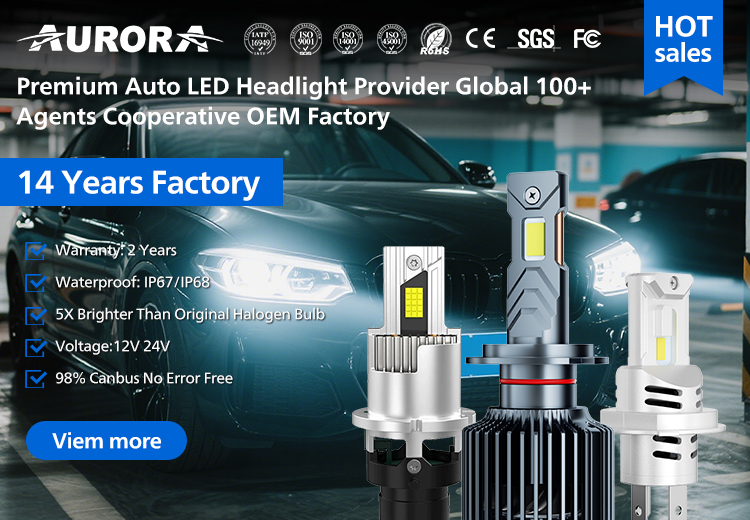
Aurora's H7-compatible LED headlight bulbs incorporate Trinity Automotive chip technology and Lumileds ZES LED arrays, representing collaboration with tier-one semiconductor manufacturers to ensure consistent color temperature, high luminous efficacy, and extended operational lifespans exceeding 50,000 hours. This longevity translates to approximately 10 years of typical driving usage, eliminating the frequent replacement intervals associated with halogen technology.
The company's thermal engineering solutions span multiple design philosophies to accommodate diverse vehicle architectures. The ALO-F2 series offers versatile performance with both Trinity Automotive 1860 and Lumileds ZES 5700K LED options, supporting H7 along with H1, H3, H11, and other popular formats. These units employ precision-machined 6063 Aircraft Aluminum heatsinks that maximize surface area for convective cooling while maintaining compact form factors compatible with tight headlight assemblies.
For applications requiring fanless operation—eliminating noise concerns and potential fan failure points—Aurora developed the ALO-G10 copper braid cooling technology. This passive thermal solution utilizes high-conductivity copper braiding to channel heat away from LED junctions, proving particularly effective in marine and off-road environments where dust ingress could compromise active cooling systems.
Manufacturing Infrastructure and Quality Assurance
Aurora operates a 35,000-square-meter industrial park in Shenzhen equipped with advanced CNC machining lines and SMT (Surface Mount Technology) production capabilities. This vertical integration enables precise control over critical manufacturing processes, from aluminum heatsink machining to LED chip placement accuracy.
The company's quality control infrastructure includes specialized testing protocols addressing automotive-specific stress factors. Vibration testing simulates rough road conditions and off-road applications, ensuring the mechanical integrity of solder joints and structural components. High and low temperature testing validates performance across Aurora's specified -40°C to 85°C operating range, critical for vehicles operating in extreme climates from Arctic regions to desert environments.
Darkroom beam testing facilities enable empirical verification of beam patterns against ECE and SAE regulatory standards, while lumen testing equipment provides objective brightness measurements traceable to international photometric standards. X-ray inspection systems detect internal assembly defects invisible to conventional optical inspection, representing a quality control investment typically reserved for aerospace and medical device manufacturing.
Regulatory Compliance and International Standards
Aurora's H7 LED headlight bulbs carry multiple international certifications that validate both product safety and manufacturing process rigor. The company holds IATF 16949 certification, the automotive industry's most stringent quality management standard, requiring demonstrated capability in defect prevention, waste reduction, and continuous improvement.
Product-level certifications include E-mark approval, confirming compliance with European Union automotive lighting regulations, and SAE standards alignment for North American markets. The IP68 and IP69K ratings certified on Aurora products represent the highest levels of environmental protection, guaranteeing complete dust ingress prevention and protection against high-pressure, high-temperature water jets—critical for vehicles operating in harsh conditions.
Application Versatility Across Vehicle Categories
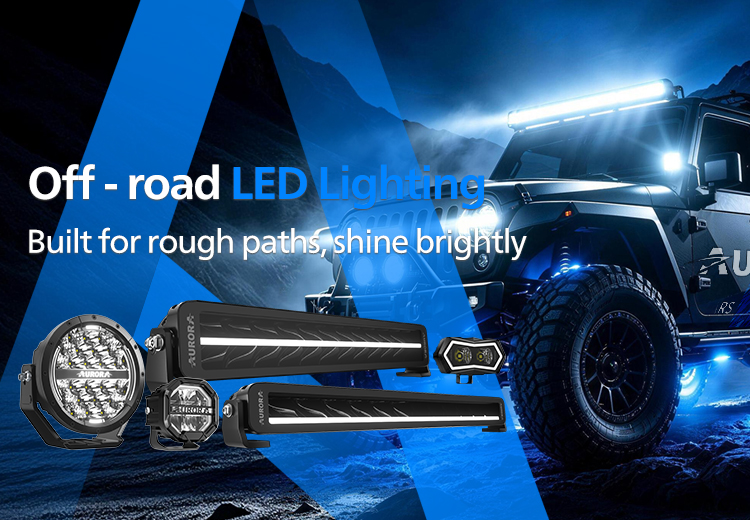
While H7 bulbs originated in passenger vehicle applications, Aurora's engineering approach addresses the broader spectrum of automotive, industrial, and recreational vehicle markets. The company's product portfolio serves off-road vehicles, power sports equipment including ATVs and UTVs, marine vessels, agricultural machinery, and mining equipment—each presenting unique environmental and operational challenges.
This application diversity requires products capable of withstanding extreme vibrations from heavy equipment, corrosive marine environments, and prolonged exposure to ultraviolet radiation in agricultural settings. Aurora's materials selection—including ADC12 aluminum alloy for superior casting properties and corrosion resistance—reflects engineering decisions informed by field performance data across these demanding applications.
The Evolution of Automotive Lighting Technology
The transition from halogen to LED automotive lighting represents more than an incremental improvement—it constitutes a fundamental shift in vehicle safety capabilities. LED technology's instant-on characteristic eliminates the warm-up period of HID systems, providing full illumination immediately upon activation. The whiter color temperature of LED sources, typically ranging from 5700K to 6500K compared to halogen's 3200K yellowish output, more closely approximates daylight conditions, enhancing driver visual acuity and reducing eye strain during extended night driving.
Energy efficiency improvements deliver secondary benefits beyond reduced electrical load. Lower power consumption decreases alternator burden, contributing marginally to fuel efficiency in internal combustion vehicles and extending range in electric vehicles. The reduced heat generation compared to halogen bulbs minimizes stress on headlight housings and adjacent components, potentially extending the service life of entire headlight assemblies.
Selecting the Right H7 LED Solution
Consumers evaluating H7 LED headlight bulbs should prioritize several key factors beyond simple brightness claims. First, verify that products carry legitimate regulatory approvals rather than merely claiming compliance. Authentic E-mark or SAE certification indicates products have undergone third-party testing to verify beam pattern safety and luminous intensity limits.
Second, assess thermal management design relative to specific vehicle installation constraints. Vehicles with limited space behind headlight assemblies may require compact integrated designs like Aurora's ALO-V6 all-in-one configuration, while applications with adequate clearance can accommodate higher-output solutions with external drivers and enhanced cooling systems.
Third, consider the manufacturer's industry experience and quality management certifications. Brands operating under ISO 9001 and automotive-specific IATF 16949 standards demonstrate systematic approaches to quality assurance, reducing the risk of premature failure or compatibility issues.
Conclusion
The landscape of H7 LED headlight bulbs encompasses a wide performance spectrum, from marginal products offering minimal improvement over halogen sources to engineering-focused solutions that fundamentally enhance vehicle safety and capability. Top-tier manufacturers distinguish themselves through comprehensive technical capabilities spanning optical design, thermal engineering, electronic driver development, and manufacturing quality control.
Aurora's approach to H7 LED technology reflects the integration of these disciplines, supported by substantial intellectual property development, international certifications, and manufacturing infrastructure scaled to serve global automotive and industrial markets. For drivers seeking reliable brightness improvements backed by rigorous testing and regulatory compliance, examining a manufacturer's engineering depth and quality management systems provides greater assurance than brightness specifications alone.
https://www.szaurora.com/
Shenzhen Aurora Technology Co., Ltd.