
Why RMA Has Become the Hidden Cost Center in Phone Repair
For high-volume mobile repair businesses, profitability is no longer determined by how many devices are repaired per day, but by how few come back. Return Merchandise Authorization (RMA) rates—driven by touch failure, display inconsistency, green lines, burn-in, or post-install instability—have quietly become one of the largest operational risks in the aftermarket repair industry.
The iPhone XS Max, as a high-installation-volume model still widely active in global markets, exemplifies this challenge. Repair shops handling hundreds or thousands of XS Max screen replacements monthly face cumulative losses when screen modules lack consistency, compatibility, or long-term stability.
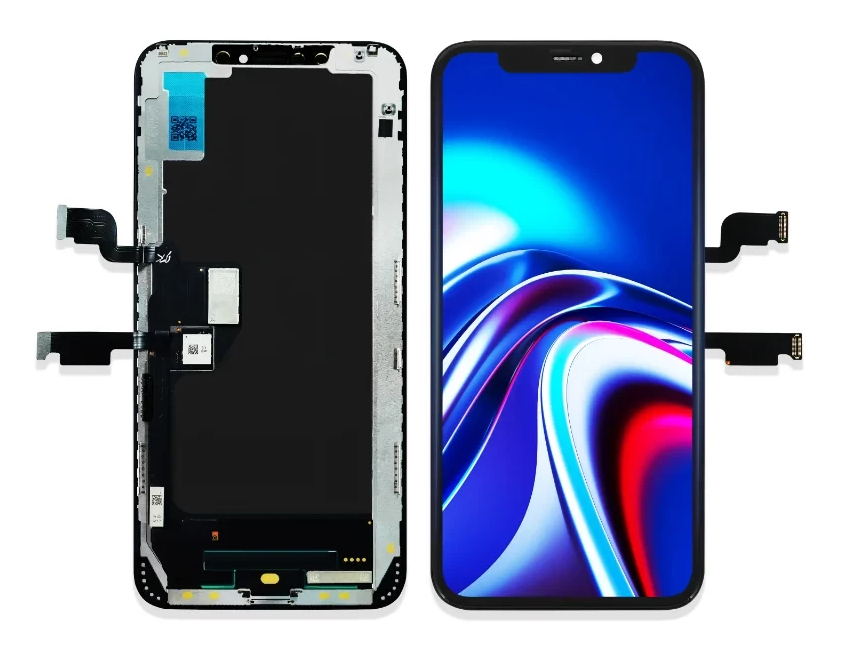
The Kelai JK Soft OLED iPhone XS Max screen is engineered specifically to address these operational pain points, helping repair businesses systematically reduce RMA rates, stabilize quality outcomes, and scale their services with confidence.
RMA Is Not a Random Event — It Is a Supply Chain Outcome
Industry data from global aftermarket repair associations indicates that 30–45% of RMAs are directly linked to screen module quality variance, not installation error. These failures typically surface within the first 7–30 days after repair, damaging customer trust and increasing labor overhead.
Kelai approaches RMA reduction as a manufacturing and engineering challenge, not a warranty policy issue.
As a leading Chinese manufacturer specializing in smartphone LCD and OLED display modules, Kelai integrates R&D, production, and quality validation into a single supply system. The JK brand is positioned specifically for the global aftermarket repair channel, where repeatability and compatibility matter more than one-time performance metrics.
Soft OLED Engineering Focused on Aftermarket Reality
Unlike rigid OLED or low-grade soft OLED alternatives, the JK Soft OLED for iPhone XS Max is engineered around post-repair stress conditions, not factory-assembly assumptions.
Key engineering priorities include:
-
Stable flexible substrate behavior after multiple thermal cycles
-
Controlled bending resilience during installation and frame fitting
-
Reduced micro-crack propagation under long-term pressure
-
Consistent pixel response across brightness levels
According to display industry research, flexible OLED panels with optimized stress distribution show up to 25% lower early failure rates in aftermarket installations compared to non-optimized alternatives. Kelai’s JK Soft OLED aligns with this data by prioritizing mechanical and electrical stability under real repair conditions.
Compatibility That Reduces Invisible Failure Points
One of the most underestimated causes of RMA is partial incompatibility—screens that appear functional at installation but fail weeks later due to mismatched signal tolerance or IC instability.
Kelai’s strength lies in rapid adaptation across brands and models, supported by in-house R&D and manufacturing.
For the iPhone XS Max, the JK Soft OLED is designed to ensure:
-
Stable communication with original device logic boards
-
Accurate touch response mapping across the full display area
-
Controlled power consumption to avoid long-term IC stress
-
Consistent True Tone and display behavior where applicable
This compatibility-driven design philosophy directly reduces delayed failures, which are the most costly type of RMA for repair businesses.
Manufacturing Consistency at Scale
High-volume repair businesses do not fail because of one bad screen—they fail because of batch inconsistency.
Kelai operates as a technology-driven screen module manufacturer, capable of supplying consistent quality at scale across global markets. The company’s production systems are optimized for:
-
Uniform raw material sourcing
-
Standardized module assembly processes
-
Multi-stage functional testing
-
Continuous yield and failure-rate monitoring
Industry manufacturing benchmarks show that screen module suppliers with integrated R&D and production reduce batch-related defect rates by 20–30% compared to trading-based suppliers. This consistency is a critical factor for repair chains operating across multiple locations.
Designed for the Global Aftermarket Repair Ecosystem
Kelai’s market positioning is clear: serving the global aftermarket repair industry, not niche or limited-use scenarios.
The JK brand supports:
-
Full brand coverage across mainstream smartphone manufacturers
-
Broad model compatibility covering 70–80% of active users
-
Supply structures suitable for wholesalers, distributors, and repair chains
-
Stable long-term availability rather than short production runs
This ecosystem approach enables repair businesses to standardize their screen sourcing strategy, reducing training costs, inventory complexity, and quality variability.
RMA Reduction as an Operational Advantage
Reducing RMA rates delivers measurable benefits beyond warranty savings:
-
Lower technician rework hours
-
Higher customer satisfaction and retention
-
Stronger online review performance
-
Improved cash flow stability
-
Greater confidence in scaling repair volume
For high-volume operations, even a 1–2% reduction in RMA rate can translate into significant annual cost savings and operational resilience.
Kelai’s JK Soft OLED for iPhone XS Max is designed to support these outcomes by aligning engineering decisions with real-world repair economics.
Industry Data Supporting Quality-Driven Aftermarket Sourcing
-
Global mobile repair market reports show that display modules account for over 50% of total part-related returns
-
Studies indicate that consistent supplier sourcing can reduce warranty disputes by up to 35%
-
Repair chains using standardized screen brands report higher technician efficiency and lower training time
These data points reinforce why screen module selection is a strategic decision, not a commodity purchase.
Frequently Asked Questions (FAQ)
Q1: Is the JK Soft OLED suitable for high-frequency installation environments?
Yes. It is engineered for repeat installations with stable performance under mechanical and thermal stress.
Q2: How does Kelai ensure batch-to-batch consistency?
Through integrated R&D, standardized production processes, and continuous quality monitoring across all manufacturing stages.
Q3: Is this screen optimized for aftermarket repair rather than factory use?
Yes. The JK Soft OLED is specifically designed for the global aftermarket repair environment.
Q4: Can this help reduce short-term and delayed RMAs?
Yes. Compatibility control and mechanical stability significantly reduce both immediate and delayed failure rates.
Conclusion: RMA Reduction Starts with Screen Engineering
For high-volume mobile repair businesses, RMA reduction is not achieved through stricter policies or better customer communication—it starts with choosing screen modules engineered for aftermarket reality.
The Kelai JK Soft OLED iPhone XS Max screen reflects a manufacturing philosophy built on compatibility, consistency, and scalability. By aligning R&D and production with the operational needs of repair businesses, Kelai enables repair partners worldwide to reduce returns, protect margins, and deliver reliable repair outcomes at scale.
https://www.jklcddisplay.com/
Shenzhen Kelai Intelligent Display Co., Ltd.