

Thermoplastic Rubber (TPR) erasers have become increasingly popular in the global stationery market, especially colored TPR erasers. With vibrant hues, soft textures, and excellent erasing ability, they are widely used by students, artists, and professionals alike. However, behind their appealing look lies an intricate balance of material science, pigment selection, performance characteristics, and safety considerations. In this article, we’ll explore what makes colored TPR erasers unique, how pigments influence their performance and appearance, and why safety matters for consumers across all age groups.
1. Understanding TPR Erasers: Material and Basics
TPR stands for Thermoplastic Rubber, a class of copolymers or physical mixes of polymers (usually plastic and rubber) that combine both elastic and thermoplastic properties. Unlike traditional rubber or PVC erasers, TPR erasers can be melted and reshaped — a feature that enables custom molding, wide color ranges, and soft textures.
TPR erasers are composed mainly of:
-
Thermoplastic Elastomers (TPE) — base polymer providing elasticity and flexibility.
-
Fillers — for texture control and cost efficiency.
-
Color pigments — to give erasers their vibrant colors.
-
Additives — such as anti-oxidants and UV stabilizers for longer shelf life.
This combination results in erasers that are soft, non-abrasive, and less likely to tear the paper — key reasons they are preferred in modern stationery.
2. Pigments in Colored TPR Erasers: What You Need to Know
Color plays a major role in consumer preference. Whether used in schools or offices, the visual appeal of colored erasers drives purchase decisions. But producing vibrant, stable colors in TPR erasers isn’t as simple as adding paint. It involves careful pigment selection and processing, which impacts appearance, durability, and safety.
2.1 Types of Pigments Used
Inorganic Pigments
-
Provide excellent color stability and resistance to heat.
-
Common examples: titanium dioxide (white), iron oxides (reds/yellows).
-
Pros: Good permanence, non-fading.
-
Cons: Limited bright shades compared to organic pigments.
Organic Pigments
-
Offer bright, vivid tones — ideal for colorful erasers.
-
Examples include azo pigments and phthalocyanine blues/greens.
-
Pros: Bright colors, wide range.
-
Cons: Some require careful processing to ensure compatibility with TPR.
Dyes
-
Used less frequently because they dissolve in the polymer, which can impact mechanical properties.
-
Best for achieving translucent effects.
2.2 Pigment Compatibility and Dispersion
Pigments must be evenly dispersed in the TPR matrix to avoid color streaks or weak spots. Poor dispersion can lead to:
-
Uneven color distribution
-
Weak mechanical performance
-
Surface defects
Manufacturers use advanced mixing techniques like twin-screw extrusion to ensure pigments are thoroughly integrated without degrading the TPR base.
2.3 Color Fastness and Durability
Since erasers are subject to friction and handling, pigments must resist:
-
Fading under light (UV stability)
-
Leaching (color rubbing off onto paper)
-
Heat during processing
High-quality TPR erasers are tested for color fastness to ensure that vibrant hues stay intact throughout use.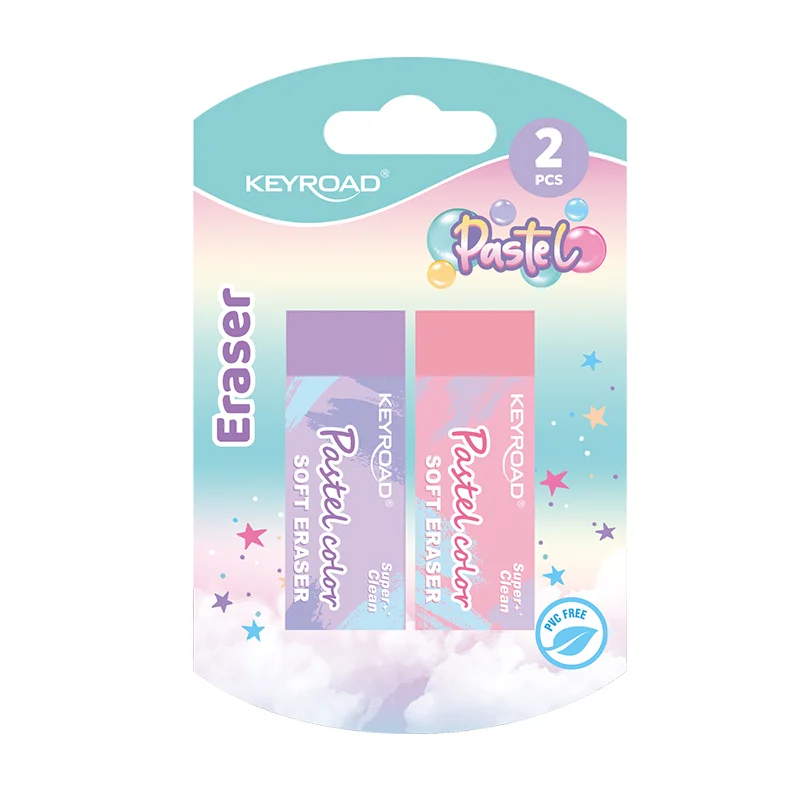
3. Performance Characteristics of Colored TPR Erasers
A TPR eraser’s performance is defined not just by how it looks, but by how well it erases graphite and colored pencil marks, how it feels during use, and how cleanly it works without damaging paper.
3.1 Softness and Texture
TPR erasers are known for their soft, pliable texture, which:
-
Minimizes paper abrasion
-
Reduces tearing
-
Provides a comfortable feel during erasing
The softness is influenced by:
-
TPR formulation (type of elastomer)
-
Amount and type of fillers
-
Pigment load
High pigment content can sometimes make an eraser firmer, so manufacturers balance color intensity with tactile quality.
3.2 Erasing Efficiency
A great colored TPR eraser must remove marks cleanly without excessive friction or residue. Performance metrics include:
-
Erase Rate: How much of the mark is removed with minimal strokes.
-
Residue Production: Quantity and ease of removing eraser shavings.
-
Smearing Resistance: Whether pigment or graphite smears on the paper.
Superior TPR erasers are engineered for high erase rates and low residue, making them ideal for detailed work like drawing or drafting.
3.3 Heat Resistance and Shelf Stability
TPR erasers should maintain consistency under varying conditions. Poorly formulated erasers might become too soft in heat or too hard in cold environments. Good quality TPR erasers balance flexibility and stability for consistent use across climates.
4. Safety Considerations for Colored TPR Erasers
Safety is a primary concern, especially for products designed for children. Colored TPR erasers must meet strict standards to ensure they are non-toxic and free of harmful chemicals.
4.1 Non-Toxicity Standards
Leading safety standards for stationery include:
-
ASTM D4236 (USA: labeling art materials)
-
EN71 (Europe: toy safety)
-
ISO 9001/ISO 14001 (quality and environmental management)
Compliant TPR erasers ensure that:
-
Pigments are free from heavy metals (lead, cadmium, chromium)
-
No phthalates are present that may cause health issues
Many manufacturers conduct third-party testing to validate safety claims.
4.2 Allergy and Skin Sensitivity
Soft TPR erasers often come in direct contact with hands. Manufacturers must ensure:
-
No skin irritants in the formulation
-
Absence of volatile organic compounds (VOCs)
-
Hypoallergenic properties for safe everyday use
4.3 Eco-Friendly and Biodegradable Options
Environmental safety is gaining importance. Some brands now offer:
-
Biodegradable TPR erasers
-
Pigments derived from non-toxic, eco-friendly sources
-
Reduced reliance on synthetic additives
Eco-conscious consumers increasingly prefer products that align with sustainable values.
5. Customization and Market Trends
Colored TPR erasers are not just functional — they are also a branding opportunity. Customized shapes, logos, and color schemes help educational institutions, businesses, and retailers differentiate their products.
5.1 Custom Shapes and Branding
TPR’s thermoplastic nature allows:
-
Custom molds (animals, characters, logos)
-
Multicolor sections
-
Embedded features
These customizations are especially popular in:
-
Promotional giveaways
-
Children’s stationery sets
-
Premium art supplies
5.2 Trends in Pigment Choices
Current trends include:
-
Pastel and neon shades for children’s products
-
Earth tones for eco-friendly lines
-
Gradient and dual-tone effects for premium aesthetics
Manufacturers are constantly adding new pigment technologies to stay ahead of design trends.
6. Buying Guide: Choosing the Right Colored TPR Erasers
For retailers and buyers, understanding quality markers helps in selecting products that balance performance, aesthetics, and safety.
6.1 Quality Indicators
-
Even and vibrant color dispersion
-
Soft, pliable texture with excellent erase abilities
-
Minimal residue production
-
Compliance with safety standards (ASTM, EN71)
6.2 Supplier Considerations
-
Clear material specifications (TPE grade, pigment type)
-
Safety test reports and certifications
-
Customization capabilities
-
MOQ (Minimum Order Quantity) and pricing tiers
High-quality TPR erasers may cost slightly more, but they deliver better user satisfaction, safer performance, and longer shelf life.
7. Conclusion
Colored TPR erasers combine aesthetic appeal with functional excellence. From careful pigment selection and processing to ensuring top-tier performance and safety, every detail matters. Whether for schoolchildren, artists, or promotional use, these erasers represent a fusion of material science and creative design.
For buyers and brands, choosing the right colored TPR eraser means understanding not only how they look but how they perform and protect users — especially young ones. With rising demand for safe, eco-friendly, and visually engaging stationery products, colored TPR erasers are set to remain a staple in classrooms and offices around the world.
www.johnshenstationery.com
johnshenstationery